(单词翻译:单击)
原文欣赏
It's too late to change the plan now, Harry told Hermione.
“已经来不及改变计划了,”哈利对赫敏说,
We haven't got time to send Charlie another owl, and this could be our only chance to get rid of Norbert.
“我们没有时间再派一只猫头鹰去找查理,而且这大概是我们摆脱诺伯的惟一机会了。
We'll have to risk it. And we have got the invisibility cloak, Malfoy doesn't know about that.
我们不得不冒一次险。我们有隐形衣呢,这是马尔福不知道的。”
They found Fang, the boarhound, sitting outside with a bandaged tail when they went to tell Hagrid, who opened a window to talk to them.
他们去通知海格时,发现大猎狗牙牙坐在门外,尾巴上包着绷带。海格打开窗户跟他们说话。
I won't let you in, he puffed. Norbert's at a tricky stage — nothin' I can't handle.
“我不能让你们进来,”他喘着气说,“诺伯现在很难对付——我拿它没有办法。”
When they told him about Charlie's letter, his eyes filled with tears,
他们把查理来信的事对他说了,他的眼里噙满泪水,
although that might have been because Norbert had just bitten him on the leg.
不过这也可能是因为诺伯刚刚咬了他的腿。
Aargh! It's all right, he only got my boot — jus' playin' — he's only a baby, after all.
“呵呵!没关系,它只咬了我的靴子——它是在玩耍呢——说到底,它还是个小毛娃啊。”
The baby banged its tail on the wall, making the windows rattle.
小毛娃用尾巴梆梆地敲着墙,震得窗户咔咔直响。
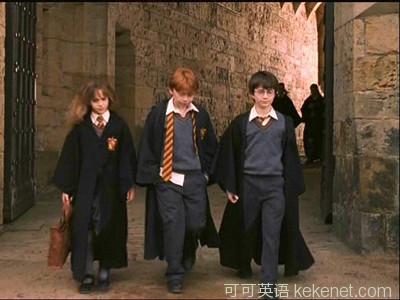
Harry and Hermione walked back to the castle feeling Saturday couldn't come quickly enough.
哈利和赫敏走回城堡,心里盼望着星期六早点到来。
重点讲解
一.change:n.变化, 零钱 v.改变
【语法用法】
change作“改变”时,是指“换走”,不是指“换来”。表示将旧帽子换新,应说change the old cap(for a new one)。不说change a new cap;
change常以复数形式出现。
We have to change trains at York.
在一些表达方式里,change前面不加a/the,如a change of address,a change of name,a change of scene,a change of subject等;
change of air指“移地疗养”,前面一般加a,也可不加;
change在指“零钱”或“找头”时,作不可数名字,前面不加a;
change作动词指“换上衣服”时,后通常接介词into连用。
【错句举例与错句分析】
错句: Having taken off his clothes,he changed his new shirt.
订正: Having taken off his clothes,he changed into his new shirt.
翻译: 他脱下衣服,换了套新的西装。
分析: change作动词指“换上衣服”时,后通常接介词into连用。
【词义辨析】
change, alter, vary, convert, modify, transform, turn
这些动词均含有“变化,改变”之意。
change指任何变化,完全改变,强调与原先的情况有明显的不同。
alter常指轻微的改变,强调基本上保持原物、原状的情况下所进行的部分改变。
vary暗示不规则或断断续续地变。
convert指进行全部或局部改变以适应新的功能或用途。指信仰或态度时,强调较激烈、大的改变。
modify强调起限定作用的变化或变更。指细小的变化,常含“缓和、降调”的意味。
transform指人或物在形状、外观、形式、性质等方面发生的彻底变化,失去原状成为全新的东西。
turn指外形、颜色、气味、性质等方面的变化,比change更通俗。
【例句用法】
Can you change a five-pound note?
你能换开五英镑的票子吗?
Her expression changed when she heard the news.
她听到这一消息时表情就变了。
二.walk:v.步行, 陪...走, 散步, 偷走, 走过 n.步行, 散步, 人行道
【词义辨析】
walk, stride, stroll, strut, pace, step
这些动词均有“行走,徒步”之意。
walk最常用词,中性词,指除跑、跳之外所有移步的动作。
stride着重步子大而且节奏有力,流露出匆忙、烦恼、得意等情绪。
stroll多指走走停停,步子缓慢,悠闲自得,漫无目的。
strut指大摇大摆地走,含过分自信或自高自大意味。
pace指踱步,走步。
step多用来指“短步,台步或急步”。
【例句用法】
She walked away with two first prizes.
她轻而易举地赢了两项头等奖。
Somebody has walked off with my pen.
有人把我的钢笔偷走了。


