(单词翻译:单击)
《名人传记》之乔布斯最后一件事
president john sculley admits apple will be
约翰斯考利加盟苹果公司这件事
Just another personal computer company unless macintosh
在个人电脑领域 同麦金塔电脑的发布一样
Becomes an industry milestone in the next 100 days.
具有里程碑意义
there was kind of a love affair at the beginning.
一开始这里还有一段关于这两人的笑谈
I mean, steve really trusted him
史蒂夫非常的信任他
And really saw a kindred spirit, Someone who would help him build apple.
把他视为能够帮助他建设好苹果公司的灵魂伙伴
His love was apple.
他的挚爱就是苹果公司.
He envisioned being with apple for his life.
他想一生都与苹果公司为伴
He said, "but that doesn't mean there won't be periods
他说,"虽然我不会离开苹果,但是很难说不会有这样一个时期,
"when I will leave and I will do other things
当我离开苹果公司去做些别的什么事情,
And my life will weave in and out of apple."
我的生命会依然 伴随着苹果"
once again, jobs' foresight was spot on.
又一次,乔布斯的预言成为了现实
Two years after sculley arrived at apple,
在斯考利到苹果公司两年后
The love affair turned sour as company profits faltered.
在公司盈利失败面前,那段奇妙的关系变成了痛苦的折磨
Steve was never fired from apple,
史蒂夫从未在苹果公司里鲁莽行事
But he was ostracized and demoted
但是却被排挤和降级,
And put in an office in an empty building,
并且被安排进了一间空建筑的办公室
And after that he he resigned in 1985
在那以后,他在1985年选择了辞职,
And then immediately sold his more than 6 million shares
并且立刻卖掉了他大约600万美元的股票
He was the largest single shareholder of apple at the time,
他是苹果公司当时最大的个人股东,
And sold his stock at a bad price
却在低价时候卖掉了他所有的股票
And didn't get as much money as he should have
并且没有得到他应该得到的钱,
Or could have had he done it smartly,
如果他能聪明处理这件事的话
but he was angry.
但是他太生气了。
He felt so betrayed, so angry, so disillusioned
他感觉如此受到背叛,愤怒,失望
That sculley was, in his mind,
他觉得斯考利
at least part of if not the ringleader in what he viewed as a coup To remove him,
就是那个最终逼迫他离开苹果的罪魁祸首
and steve was pissed off,
乔布斯非常愤怒
And he was really pissed off about sculley
而他确确实实值得对斯考利感到生气
Because he brought sculley in and trusted him
因为正是他自己带来了斯考利并且无比信任他
And then felt betrayed by him.
所以他觉得自己被背叛了
So he sold his stock and he went off,
因此他卖掉了自己的股票,并且选择离开
Took his tens of millions of dollars
带着他自己几百万美元
But not hundreds of millions of dollars
而不是几亿资产
And started a new life.
开始了新的生活.
《乔布斯传》第十八章 NeXT 自由的普罗米修斯114
Gates and NeXT
盖茨和NeXT
Bill Gates was not a soul mate. Jobs had convinced him to produce software applications for the Macintosh, which had turned out to be hugely profitable for Microsoft. But Gates was one person who was resistant to Jobs’s reality distortion field, and as a result he decided not to create software tailored for the NeXT platform. Gates went to California to get periodic demonstrations, but each time he came away unimpressed. “The Macintosh was truly unique, but I personally don’t understand what is so unique about Steve’s new computer,” he told Fortune.
比尔·盖茨跟乔布斯性情并不相投。乔布斯曾说服盖茨为麦金塔做软件应用,最后给微软带来了丰厚利润。但是,比尔·盖茨抗拒乔布斯的现实扭曲力场,因此,他决定不为NeXT平台开发专门软件。盖茨会定期到加利福尼亚州看NeXT的演示,但是每次他都不以为然。“麦金塔真的是独一无二,但是我个人不太理解史蒂夫的新电脑有什么特别之处。”盖茨对《财富》杂志表示。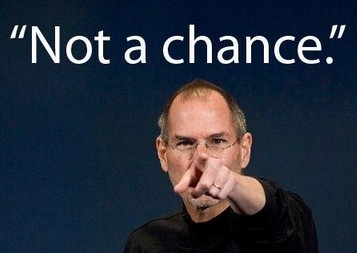
Part of the problem was that the rival titans were congenitally unable to be deferential to each other. When Gates made his first visit to NeXT’s Palo Alto headquarters, in the summer of 1987, Jobs kept him waiting for a half hour in the lobby, even though Gates could see through the glass walls that Jobs was walking around having casual conversations. “I’d gone down to NeXT and I had the Odwalla, the most expensive carrot juice, and I’d never seen tech offices so lavish,” Gates recalled, shaking his head with just a hint of a smile. “And Steve comes a half hour late to the meeting.”
造成这种情况的部分原因在于,这两位彼此竞争的巨头无法做到互相恭敬。1987年夏天,盖茨第一次造访NeXT公司位于帕洛奥图的总部,乔布斯让他在大堂里等了半个小时,盖茨甚至透过玻璃墙看到了乔布斯只是在里面走来走去地闲谈。“我到NeXT,喝了最贵的奥德瓦拉牌胡萝卜汁,见识了如此豪华的科技企业办公室,”盖茨回忆道,带着一抹笑容摇了摇头,“我们的会面史蒂夫迟到了半个小时。”
Jobs’s sales pitch, according to Gates, was simple. “We did the Mac together,” Jobs said. “How did that work for you? Very well. Now, we’re going to do this together and this is going to be great.”
根椐盖茨的说法,乔布斯的推销说辞很简单。“我们曾一起做过Mac项目。”乔布斯说,“结果对你怎么样?非常好。现在,我们一起做这个,也会非常棒。”
But Gates was brutal to Jobs, just as Jobs could be to others. “This machine is crap,” he said. “The optical disk has too low latency, the fucking case is too expensive. This thing is ridiculous.” He decided then, and reaffirmed on each subsequent visit, that it made no sense for Microsoft to divert resources from other projects to develop applications for NeXT. Worse yet, he repeatedly said so publicly, which made others less likely to spend time developing for NeXT. “Develop for it? I’ll piss on it,” he told InfoWorld.
然而,盖茨对乔布斯很残忍,就像乔布斯对其他人一样。“这款机器就是垃圾他说,“光驱的反应时间太长,机箱太他妈贵,整个东西太荒谬。”当时盖茨就决定,微软不会分散其他项目的资源来为NeXT开发应用程序,并且在随后的每次到访都重申了这一点。更糟的是,他一再公开表态,致使其他软件公司也不愿意花时间为NeXT开发软件。“为它开发?我会在它上面撒尿。”他在《信息世界》(InfoWorld)上说。
When they happened to meet in the hallway at a conference, Jobs started berating Gates for his refusal to do software for NeXT. “When you get a market, I will consider it,” Gates replied. Jobs got angry. “It was a screaming battle, right in front of everybody,” recalled Adele Goldberg, the Xerox PARC engineer. Jobs insisted that NeXT was the next wave of computing. Gates, as he often did, got more expressionless as Jobs got more heated. He finally just shook his head and walked away.
两人碰巧在一次会议的走廊上遇见时,乔布斯开始因为盖茨拒绝为NeXT开发软件而训斥对方。“等你有市场的时候我会考虑。”盖茨回答说。乔布斯生气了。“当着周围所有人的面,他们俩开始大声争吵。”阿黛尔·戈德堡回忆说,她是施乐帕洛奧图研究中心的工程师,当时也在场。乔布斯坚持认为NeXT会是计算机产业的下一波浪潮。这次争执跟以往一样,乔布斯越是激动,盖茨就越是一言不发。最后盖茨摇摇头走开了。
Beneath their personal rivalry—and occasional grudging respect—was their basic philosophical difference. Jobs believed in an end-to-end integration of hardware and software, which led him to build a machine that was not compatible with others. Gates believed in, and profited from, a world in which different companies made machines that were compatible with one another; their hardware ran a standard operating system (Microsoft’s Windows) and could all use the same software apps (such as Microsoft’s Word and Excel). “His product comes with an interesting feature called incompatibility,” Gates told the Washington Post. “It doesn’t run any of the existing software. It’s a super-nice computer. I don’t think if I went out to design an incompatible computer I would have done as well as he did.”
在两人的争执以及偶尔不情愿地表示出的尊重背后,是基本理念上的差异。乔布斯看好硬件和软件集成的端到端一体化系统,这就致使他要创造出与其他软件和机器都不兼容的计算机。盖茨推崇不同的公司做出互相兼容的机器,自己从中获利:这些硬件设备都运行同一个标准的操作系统——微软的Windows操作系统,并都能运行同样的软件应用程序,如微软的Word和Excel。“他的产品有一个有趣的特点,就是不兼容性,”盖茨告诉《华盛顿邮报》说,“它不运行任何已有的软件。它是一台超级棒的电脑。如果要我来设计一款不兼容的计算机,我觉得自己做不到他那么好。”
At a forum in Cambridge, Massachusetts, in 1989, Jobs and Gates appeared sequentially, laying out their competing worldviews. Jobs spoke about how new waves come along in the computer industry every few years. Macintosh had launched a revolutionary new approach with the graphical interface; now NeXT was doing it with object-oriented programming tied to a powerful new machine based on an optical disk. Every major software vendor realized they had to be part of this new wave, he said, “except Microsoft.” When Gates came up, he reiterated his belief that Jobs’s end-to-end control of the software and the hardware was destined for failure, just as Apple had failed in competing against the Microsoft Windows standard. “The hardware market and the software market are separate,” he said. When asked about the great design that could come from Jobs’s approach, Gates gestured to the NeXT prototype that was still sitting onstage and sneered, “If you want black, I’ll get you a can of paint.”
1989年,在马萨诸塞州剑桥市的一个论坛上,乔布斯和盖茨先后现身,陈述彼此截然相反的世界观。乔布斯谈到,每隔几年,计算机产业就会出现新的浪潮。麦金塔电脑借图形界面推出了革命性的新方法。现在,NeXT通过将面向对象的编程方法与采用光盘为存储介质的功能强大的计算机捆绑起来,正在引领新一辁的革命。乔布斯表示,每个大型软件厂商都意识到了自己必须成为新浪潮的一部分,“除了微软”。轮到盖茨讲话时,他重申,乔布斯控制软件和硬件端到端一体化的系统终究会失败,就像苹果与微软Windows操作系统的竞争一样。“硬件市场和软件市场是分开的。”他说。当被问及乔布斯的方法可能会产生的伟大设计时,盖茨示意大家看看还在台上的NeXT样机,嘲笑道:“如果你想要黑色,我可以给你一罐黑色油漆。”


