(单词翻译:单击)
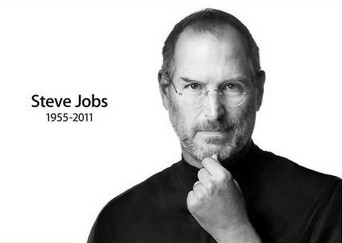
乔布斯如何改变世界
At first people said, digital animation, impossible.
最初人们认为数字动画简直是天方夜谭
Too much computer time.
电脑制作时间过长
Too awkward.
画质怪异
It would be too expensive to bring it to market.
耗资巨大 难以市场化
But Jobs and his team stick to their vision.
但乔布斯和他的团队坚持己见
In 1991, Pixar gets its break.
1991年 皮克斯工作室时来运转
Signing a deal with Disney to produce three full-length computer-animated films.
与迪士尼签约制作了三部电脑动画长片
I love the "Toy Story" series. I just do.
我超喜欢"玩具总动员"系列电影 就是喜欢
"Toy Story" is followed by one hit after another.
继"玩具总动员"后皮克斯制作的卖座动画接连不断
We were all proved wrong,yet again, by Steve Jobs.
史蒂夫·乔布斯再一次用事实证明我们之前的看法是错的
He had it figured out
他早已看出
that this was going to be a big thing.
电脑动画将会成为一个大产业
And he was going to help make it a big thing.
而他则要将这块蛋糕做大
I don't just love The Incredibles
我不只是喜爱"超人总动员"
I love Pixar.
我爱的是皮克斯
I love what they're about,
我喜爱他们的一切
what they do and what they stand for.
他们的工作 他们的理念
The product they put out.
以及他们的产品
The product respects the audience.
那是真正尊重观众意愿的产品
It's bigger than Steve Jobs could have imagined.
该产业的规模甚至超出乔布斯的想象
In 2006,
2006年
Disney buys Pixar for $7.4 billion.
迪士尼以74亿美元的价格收购皮克斯
This mouse proves to be more lucrative for Jobs than this one.
对于乔布斯 米老鼠与鼠标相比带来了更为可观的利润
Pixar with millions and the payout was billions.
当初仅投入几百万的皮克斯却卖了几十亿
That's really all you need to know.
光这些足以说明一切
Perhaps Jobs greatest contribution to Pixar was recognizing its hidden potential
或许乔布斯对皮克斯做出的最大贡献就是发掘其隐藏的潜力
and standing by his investment,
并且坚持投入资金
something he would do again and again after his return to Apple in 1997,after buying NeXT Technology.
而这些正是他1997年回归苹果买下NeXT科技之后屡试不爽的制胜奇招
He was somebody who saw technology, which was faceless,cold, mechanical,
他真正懂科技 科技本身没表情 是冰冷的 是机械的
and saw in it,the promise of a world that is warm,that reaches out, that touches people
但他能洞悉其中令人熟悉 触动人心的一面
because that's what the computer revolution is all about.
因为这也就是计算机革命的本质
Touching people.
触动人心
Jobs' sequel takes him from play things to play lists
乔布斯将他的传奇从机器拓展到音乐领域
and the world becomes his theater.
世界成为他的舞台
《乔布斯传》第二章:神奇的一对 两个乔布斯10
CHAPTER TWO
第二章
ODD COUPLE
奇特的一对
The Two Steves
两个史蒂夫
Woz
沃兹
While a student in McCollum’s class, Jobs became friends with a graduate who was the teacher’s all-time favorite and a school legend for his wizardry in the class. Stephen Wozniak, whose younger brother had been on a swim team with Jobs, was almost five years older than Jobs and far more knowledgeable about electronics. But emotionally and socially he was still a high school geek.
还在麦科勒姆班上的时候,乔布斯碰巧与一个本校的毕业生成了朋友,此人就是斯蒂芬·沃兹尼亚克(StephenWozniak)。沃兹尼亚克一直是老师最喜欢的学生,并因为在班上展现出的杰出才能而成为全校的传奇人物。他的弟弟曾经和乔布斯一起参加过游泳队,而他本人比乔布斯大了将近5岁,对电子学的了解也远超乔布斯。但从情商以及社交方面的能力来说,他依然是个高中生极客。
Like Jobs, Wozniak learned a lot at his father’s knee. But their lessons were different. Paul Jobs was a high school dropout who, when fixing up cars, knew how to turn a tidy profit by striking the right deal on parts. Francis Wozniak, known as Jerry, was a brilliant engineering graduate from Cal Tech, where he had quarterbacked the football team, who became a rocket scientist at Lockheed. He exalted engineering and looked down on those in business, marketing, and sales. “I remember him telling me that engineering was the highest level of importance you could reach in the world,” Steve Wozniak later recalled. “It takes society to a new level.”
 和乔布斯一样,沃兹尼亚克也从父亲那里学到了很多。但两人学到的东西是不同的。乔布斯的父亲是个高中辍学生,他在修理汽车的过程中学会了如何通过买卖零部件赚取可观的利润;而人称“杰里”的沃兹尼亚克的父亲弗朗西斯·沃兹尼亚克(FrancisWozniak),是加州理工学院工程系的杰出毕业生,还是校橄榄球队的四分卫,他十分崇尚工程学并且瞧不起那些从事商业、市场或销售的人。他后来成为了洛克希德公司的火箭专家,设计导弹制导系统。“我记得他告诉我,工程学是世界上最重要的,”史蒂夫·沃兹尼亚克后来回忆说,“工程学将社会带入了一个新的层级。”
One of Steve Wozniak’s first memories was going to his father’s workplace on a weekend and being shown electronic parts, with his dad “putting them on a table with me so I got to play with them.” He watched with fascination as his father tried to get a waveform line on a video screen to stay flat so he could show that one of his circuit designs was working properly. “I could see that whatever my dad was doing, it was important and good.” Woz, as he was known even then, would ask about the resistors and transistors lying around the house, and his father would pull out a blackboard to illustrate what they did. “He would explain what a resistor was by going all the way back to atoms and electrons. He explained how resistors worked when I was in second grade, not by equations but by having me picture it.”
沃兹尼亚克最早的记忆之一,就是在一个周末去了父亲工作的地方,看到了一些电子部件,父亲“把我跟这些部件一起摆在桌上,这样我就可以拿着玩了”。父亲试着让显示器上的一条波形保持平直,以证明自己设计的电路能够正常工作,而沃兹在一旁看得入了迷。“我能看到,爸爸做的任何事情都是重要的,而且他做得很棒。”那个时候的沃兹就会问父亲各种问题,都是关于屋子里随处可见的电阻和晶体管的,父亲就会拿出一块黑板,给他解释这些部件是干什么的。“他会从原子和电子开始讲起,给我解释电阻是干什么的。我上小学二年级的时候他就给我解释电阻是怎么工作的了,不是用方程式,而是用很具体形象的方式。”
Woz’s father taught him something else that became ingrained in his childlike, socially awkward personality: Never lie. “My dad believed in honesty. Extreme honesty. That’s the biggest thing he taught me. I never lie, even to this day.” (The only partial exception was in the service of a good practical joke.) In addition, he imbued his son with an aversion to extreme ambition, which set Woz apart from Jobs. At an Apple product launch event in 2010, forty years after they met, Woz reflected on their differences. “My father told me, ‘You always want to be in the middle,’” he said. “I didn’t want to be up with the high-level people like Steve. My dad was an engineer, and that’s what I wanted to be. I was way too shy ever to be a business leader like Steve.”
沃兹的父亲还教给了他其他一些东西:绝不撒谎,这深深扎根于他那单纯、不善社交的个性之中。“我父亲信奉诚实,极端的诚实。那是他教我的最重要的事情,我从没有撒过谎,到今天也是这样。”(仅有的例外就是他恶作剧的时候。)除此之外,这位父亲还给儿子灌输了对于极大野心的厌恶,这一点沃兹与乔布斯不同。他们结交40年以后,2010年,在一场苹果公司的产品发布活动上,沃兹回顾了他们之间的这种差异。“我爸爸跟我说,你总是想做一个中庸的人。”他说,“我不想成为一个像史蒂夫那样的高端人物。我爸爸是个工程师,那也是我想做的。我太腼腆了,永远不可能成为像史蒂夫那样的商业领袖。”
By fourth grade Wozniak became, as he put it, one of the “electronics kids.” He had an easier time making eye contact with a transistor than with a girl, and he developed the chunky and stooped look of a guy who spends most of his time hunched over circuit boards. At the same age when Jobs was puzzling over a carbon microphone that his dad couldn’t explain, Wozniak was using transistors to build an intercom system featuring amplifiers, relays, lights, and buzzers that connected the kids’ bedrooms of six houses in the neighborhood. And at an age when Jobs was building Heathkits, Wozniak was assembling a transmitter and receiver from Hallicrafters, the most sophisticated radios available.
到了四年级,沃兹尼亚克成为了他自称为“电子小孩”的一类人。对他来说,盯着一只晶体管要比跟一个姑娘眉来眼去来得容易,他就以矮矮胖胖、有点儿驼背的形象示众,大多数时间他都埋头于电路板中。在乔布斯还在为了一个连他父亲都解释不清的碳精话筒而迷惑的年纪,沃兹尼亚克已经在使用晶体管搭建对讲系统了,这个系统带有放大器、继电器、灯和蜂鸣器,连接了相邻的6座房子中孩子们的卧室。乔布斯还在玩希斯工具盒的时候,沃兹尼亚克已经在组装来自世界上最先进的无线电制造商哈里克拉夫特(Hallicmfters)的发射器和接收器了,他还和父亲一起获得了业余无线电执照。
Woz spent a lot of time at home reading his father’s electronics journals, and he became enthralled by stories about new computers, such as the powerful ENIAC. Because Boolean algebra came naturally to him, he marveled at how simple, rather than complex, the computers were. In eighth grade he built a calculator that included one hundred transistors, two hundred diodes, and two hundred resistors on ten circuit boards. It won top prize in a local contest run by the Air Force, even though the competitors included students through twelfth grade.
沃兹花了大量的时间在家阅读父亲的电子学期刊,他着迷于关于新式计算机的那些故事,比如强大的埃尼阿克(ENIAC)。在接触到布尔代数之后,他惊奇地发现其实计算机系统一点儿也不复杂,而是非常简单。八年级的时候,他基于二进制理论造出了一台计算器,把100只晶体管、200只二极管、200只电阻装在了10块电路板上。在当地一项由空军举办的赛事上,尽管参赛者中还有十二年级的学生,但这台计算器还是赢得了最高奖。
Woz became more of a loner when the boys his age began going out with girls and partying, endeavors that he found far more complex than designing circuits. “Where before I was popular and riding bikes and everything, suddenly I was socially shut out,” he recalled. “It seemed like nobody spoke to me for the longest time.” He found an outlet by playing juvenile pranks. In twelfth grade he built an electronic metronome—one of those tick-tick-tick devices that keep time in music class—and realized it sounded like a bomb. So he took the labels off some big batteries, taped them together, and put it in a school locker; he rigged it to start ticking faster when the locker opened. Later that day he got called to the principal’s office. He thought it was because he had won, yet again, the school’s top math prize. Instead he was confronted by the police. The principal had been summoned when the device was found, bravely ran onto the football field clutching it to his chest, and pulled the wires off. Woz tried and failed to suppress his laughter. He actually got sent to the juvenile detention center, where he spent the night. It was a memorable experience. He taught the other prisoners how to disconnect the wires leading to the ceiling fans and connect them to the bars so people got shocked when touching them.
与沃兹同龄的男孩已开始跟女孩约会、参加各种派对,而他觉得这些都比设计电路更为复杂,他显得更加不合群了。“之前我还挺受欢迎的,但突然间我就被孤立了,”他回忆说,“很长的一段时间都没有人跟我说话。”他找到了一个发泄的办法:搞些幼稚的恶作剧。高中四年级的时候,他做了一个电子节拍器——音乐教室里用来打拍子的、会发出“滴答”声的装置——然后他意识到“滴答”声听上去很像是炸弹定时器的声音。于是他把一些大块电池的标签撕掉,把它们绑在一起,然后放进了学校的储物柜里。他设定好装置,一旦柜门被打开,“滴答”频率就会变高。那天晚些时候,他被叫到了校长办公室。他还以为是因为他又一次获得了学校的最高数学奖。然而,等待他的是警察。校长布吕德先生(Mr.Bryld)在装置刚被发现时就被叫到了现场,他一把抓起那个玩意儿,紧贴胸口,抱着它勇敢地跑到了操场,然后把上面的电线拆掉。沃兹强忍着,但还是控制不住笑了出来。那天他真的被送到了青少年拘留中心,在那儿过丁一晚上。沃兹认为那是一段难忘的经历。他在里面教其他犯人把通到天花板上风扇的电线接到铁窗上,这样一且有人碰到就会被电击一下。


