(单词翻译:单击)
听力文本
Welcome to THE MAKING OF A NATION – American history in VOA Special English. The early years of the twentieth century were a time of movement for many black Americans. Traditionally, most blacks lived in the Southeastern states. But in the nineteen twenties, many blacks moved to cities in the North. Black Americans moved because living conditions were so poor in the rural areas of the Southeast. But many of them discovered that life was also hard in the colder Northern cities. Jobs often were hard to find. Housing was poor. And whites sometimes acted violently against them. This week in our series, Kay Gallant and Harry Monroe tell about the life of black Americans in the nineteen twenties and how they helped form traditions.
The years just before and after nineteen twenty were difficult for blacks. It was a time of racial hatred. Many whites joined the Ku Klux Klan organization. The Klan often terrorized blacks. Klan members sometimes burned fiery crosses in front of the houses of black families. And they sometimes beat and murdered blacks. The Ku Klux Klan also acted against Roman Catholics, Jews, and foreigners. But it hated blacks most of all. The United States also suffered a series of race riots in a number of cities during this period. White and black Americans fought each other in Omaha, Philadelphia, and other cities. The worst riot was in Chicago. A swimming incident started the violence. A black boy sailing a small boat entered a part of the beach used by white swimmers. Some white persons threw stones at the boy. He fell into the water and drowned. Black citizens heard about the incident and became extremely angry. Soon, black and white mobs were fighting each other in the streets. The violence lasted for two weeks. Thirty-eight persons died. More than five-hundred were wounded. The homes of hundreds of families were burned.
The violence in Chicago and other cities did not stop black Americans from moving north or west. They felt that life had to be better than in the South. Black Americans left the South because life was hard, economic chances few, and white hatred common. But many blacks arrived in other parts of the country only to learn that life was no easier. Some blacks wrote later that they had only traded the open racism of the rural Southeast for the more secret racism of Northern cities. Blacks responded to these conditions in different ways. Some blacks followed the ideas of Booker T. Washington, the popular black leader of the early nineteen hundreds. Washington believed that blacks had to educate and prepare themselves to survive in American society. He helped form a number of training schools where blacks could learn skills for better jobs. And he urged blacks to establish businesses and improve themselves without causing trouble with whites.
Other blacks liked the stronger ideas of William Du Bois. Du Bois felt that blacks had to take firm actions to protest murders and other illegal actions. He published a magazine and spoke actively for new laws and policies to protect black rights. Du Bois also helped form a group that later became the National Association for the Advancement of Colored People. The N.A.A.C.P. became one of the nation's leading black rights organizations in the twentieth century. Probably the most important leader for black Americans in the nineteen twenties did not come from the United States. He was Marcus Garvey from the Caribbean island of Jamaica. Garvey moved to New York City in nineteen sixteen. He quickly began organizing groups in black areas. His message was simple. He said blacks should not trust whites. Instead, they should be proud of being black and should help each other. Garvey urged blacks to leave the United States, move to Africa, and start their own nation.
Marcus Garvey organized several plans to help blacks become economically independent of whites. His biggest effort was a shipping company to trade goods among black people all over the world. Many American blacks gave small amounts of money each week to help Garvey start the shipping company. However, the idea failed. Government officials arrested Garvey for collecting the money unlawfully. They sent him to prison in nineteen twenty-five. And two years later, President Coolidge ordered Garvey out of the country. Marcus Garvey's group was the first major black organization in the United States to gain active support from a large number of people. The organization failed. But it did show the anger and lack of hope that many blacks felt about their place in American society. Blacks also showed their feelings through writing, art, and music. The nineteen twenties were one of the most imaginative periods in the history of American black art. Claude McKay, Langston Hughes, and Countee Cullen were three of the leading black poets during this time. McKay was best known for his poems of social protest. Hughes produced poems about black life that experts now say are among the greatest American poems ever written.
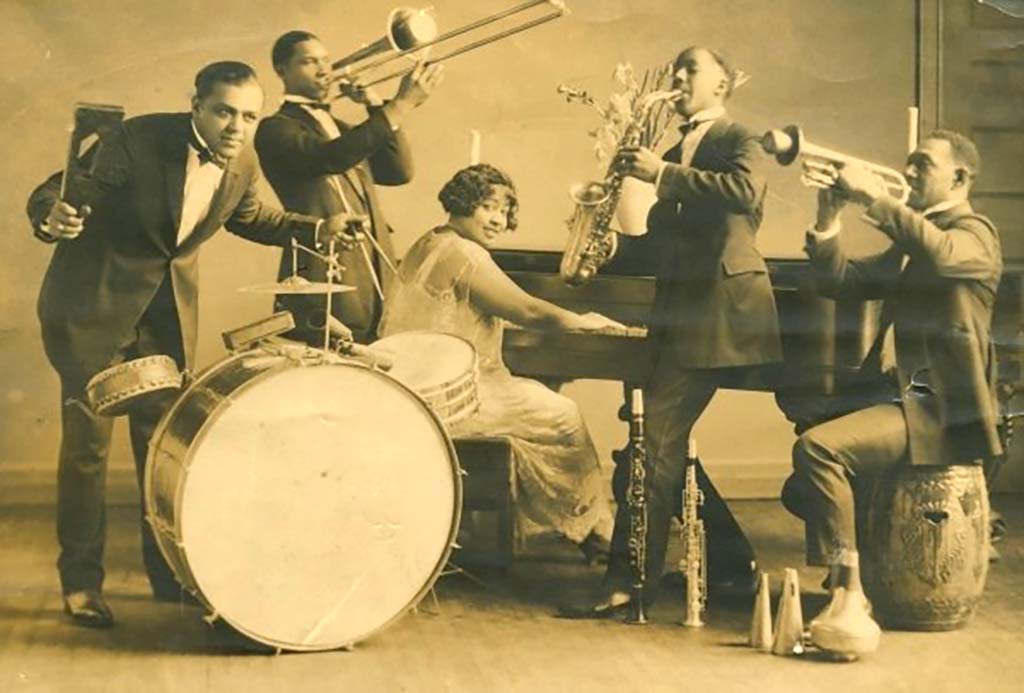
Black writers also produced longer works. Among the leading black novelists were Jessie Faucet, Jean Toomer, and Rudolph Fisher. The nineteen twenties also were an exciting time for black music. Black musicians playing the piano developed the ragtime style of music. Singers and musicians produced a sad, emotional style of playing that became known as the blues. And most important, music lovers began to play and enjoy a new style that was becoming known as jazz. Jazz advanced greatly as a true American kind of music in the nineteen twenties. Musicians Louis Armstrong, Duke Ellington and Eubie Blake played in gathering places and small theaters. White musicians and music experts from universities came to listen. Soon the music became popular among Americans of all kinds and around the world. Blacks began to recognize in the nineteen twenties their own deep roots in the United States. They began to see just how much black men and women already had done to help form American history and traditions.
The person who did the most to help blacks understand this was black historian Carter G. Woodson. Woodson received his training at two leading universities: Harvard in Massachusetts and the Sorbonne in France. He launched a new publication, The Journal of Negro History, in which he and other experts wrote about black life and history. Historians today call Woodson the father of the scientific study of black history. The nineteen twenties also were a period in which a number of blacks experimented with new political ideas and parties. The difficult social conditions of the period led many blacks to search for new political solutions. Two leftist parties -- the Socialists and the Communists -- urged blacks to leave the traditional political system and work for more extreme change. Two leading black Socialists, Chandler Owen and A. Philip Randolph, urged blacks to support Socialist candidates. However, they gained little popular support from blacks. Communists also tried to organize black workers. But generally, black voters showed little interest in communist ideas. The most important change in black political thinking during the nineteen twenties came within the traditional two-party system itself. Blacks usually had voted for Republicans since the days of Abraham Lincoln. But the conservative Republican policies of the nineteen twenties caused many blacks to become Democrats. By nineteen thirty-two, blacks would vote by a large majority for the Democratic presidential candidate, Franklin Roosevelt. And blacks continue to be a major force in the Democratic Party.
重点解析
1.a series of 一连串;一系列
The students have put forward a series of questions.
学生们提出了一系列问题。
2.more than 多于;超过
He supervised and trained more than 400 volunteers.
他指导和培训了400多名志愿者。
3.independent of 独立于;不依赖
This emission of heat is completely independent of temperature and pressure.
这热的散发全然不受温度和压力的影响。
4.vote for 选举;赞成
I was going to vote for him, but I changed my mind and voted for Reagan.
我原本准备投他的票,后来却改变了主意,把票投给了里根。
参考译文
欢迎收听VOA慢速英语之建国史话节目。20世纪初是许多美国黑人运动进行的时期。大多数黑人一直居住在东南部各州,但是在20世纪20年代,许多黑人搬到了北方的城市。美国黑人迁移是因为东南部农村地区的生活条件太差。但他们中的许多人发现,在气候较冷的北方城市,生活也很艰难。他们很难找到工作,住房条件差。白人有时对他们采取暴力行为。在本周的系列节目中,凯·格兰特和哈里·孟罗将讲述20世纪20年代美国黑人的生活,以及他们是如何帮助缔造传统的。
1920年前后的几年,对黑人来说是艰难的。那是一个种族仇恨的时代,许多白人加入了三K党组织。三K党经常恐吓黑人。有时,党内成员在黑人家庭的房屋前焚烧血十字架。他们有时殴打和谋杀黑人。三K党还对罗马天主教徒、犹太人和外国人采取了行动,但该组织最仇恨黑人。在此期间,美国多个城市也发生了一系列种族骚乱。美国白人和黑人在欧马哈市、费城和其他城市互相争斗。最严重的暴乱发生在芝加哥,一次游泳事件引发了暴力事件。一个黑人男孩把一条小船开进让白人游泳的海滩的一部分。一些白人向那个男孩扔石头,他掉进水里淹死了。黑人市民听说这件事后非常愤怒。很快,黑人和白人暴徒在街上互相争斗。暴力事件持续了两周,38人死亡,500多人受伤。数百户人家的房屋被烧毁。
芝加哥和其他城市的暴力事件,并未阻止美国黑人向北部或西部迁移。他们觉得那里的生活肯定比南方好。美国黑人离开南方是因为生活艰难,经济机会少,白人普遍仇恨黑人。但是,许多来到美国其他地方的黑人,却发现生活并不容易。一些黑人后来写道,他们只是离开了东南部农村里那种公开式的种族主义,换来的是北部城市更为隐秘的种族主义。黑人对这些情况的反应各不相同。一些黑人遵循布克·T·华盛顿的思想,布克·T·华盛顿是19世纪早期一位受欢迎的黑人领袖。华盛顿认为黑人必须接受教育,以便做好在美国社会生存的准备。他帮助建立了一些培训学校,黑人在这些地方可以学习更好的工作技能。他还敦促黑人在不和白人产生矛盾的情况下建立企业,并提高自己。
其他黑人则喜欢威廉·杜鲍斯更强势的主张。杜博伊斯认为,黑人必须采取坚决的行动,抗议谋杀和其他非法行为。他出版了一本杂志,积极宣传保护黑人权利的新法律和政策。杜鲍斯还帮助成立了一个小组,该小组后来转变为全国有色人种促进会(N.A.A.C.P.)。N.A.A.C.P.成为20世纪美国主要的黑人权利组织之一。20世纪20年代美国黑人最重要的领袖或许并非来自美国。这个人是来自加勒比牙买加岛的马库斯·加维。加维在1916年搬到了纽约市,他很快开始在黑人地区组织团体。他传达的信息很简单。他说黑人不应该相信白人。相反,他们应该为自己是黑人而自豪,应该互相帮助。加维力劝黑人离开美国,移居到非洲,去建立自己的国家。
马库斯·加维组织了几项计划,帮助黑人在经济上独立于白人。他最大的努力是组建一家航运公司,可以在全世界的黑人中进行货物贸易。许多美国黑人每周都会拿出少量的钱,帮助加维创办这家航运公司。然而,这个想法失败了。政府官员逮捕了非法收取钱款的加维。他们在1925年把他送进监狱。两年后,柯立芝总统命令加维离开美国。马库斯·加维的组织,是美国第一个获得大量民众积极支持的大型黑人组织。该组织失败了,但这确实表明,许多黑人对自己在美国社会中的地位感到愤怒、无望。黑人也通过写作、艺术和音乐来表达他们的感情。20世纪20年代是美国黑人艺术史上最富有想象力的时期之一。克劳德·麦凯、兰斯顿·休斯和康蒂·卡伦是这一时期中最重要的黑人诗人中的三位。麦凯以他的社会抗议诗著称,休斯创作出关于黑人生活的诗歌。专家们现在表示,这些是美国有史以来最伟大的诗歌之一。
黑人作家也创作了篇幅更长的作品。黑人著名作家中领军人物包括杰西·弗塞特、让·图默和鲁道夫·费舍尔。20世纪20年代也是黑人音乐的一段激动人心的时期。弹钢琴的黑人音乐家衍生出拉格泰姆音乐风格。歌手和音乐家营造一种悲伤、情绪化的演奏风格,人们后来将其称为蓝调。最重要的是,音乐爱好者开始演奏并享受一种新的风格,这就是众所周知的爵士乐。爵士乐在19世纪20年代作为一种真正的美国音乐而大获发展。音乐家路易斯·阿姆斯特朗,艾灵顿公爵和犹贝·布莱克在聚会场所和小型剧院里演奏,来自大学的白人音乐家和音乐专家前来聆听。很快,这种音乐在世界各地的美国人中流行开来。20世纪20年代,黑人开始认识到自己在美国的深厚渊源。他们看到黑人男女在帮助形成美国历史和传统方面已经做了很多。
最能帮助黑人理解现状的人,是黑人历史学家卡特·G·伍德森。伍德森在两所顶尖大学接受教育:马萨诸塞州的哈佛大学和法国的索邦大学。他创办了一份新的出版物《黑人历史杂志》,他和其他专家在杂志中撰写有关黑人生活和历史的文章。现今,历史学家称伍德森为黑人历史科学研究之父。20世纪20年代,也是许多黑人尝试新的政治思想和政党的时期。该时期困难的社会条件,导致许多黑人寻求新的政治解决办法。社会党和共产党这两支左翼政党,敦促黑人丢弃传统的政治体制,为更彻底的变革而努力。两位黑人社会党领导人,钱德勒·欧文和A. 菲利普·兰道夫,力劝黑人支持社会党候选人。然而,很少有黑人支持他们。共产主义者还试图组织黑人工人。但总的来说,黑人选民对共产主义思想兴趣不大。20世纪20年代黑人政治思想最重要的变化,发生在传统的两党制内部。自亚伯拉罕·林肯时代以来,黑人通常给共和党人投票。但是20世纪20年代保守的共和党政策,使许多黑人成为民主党人。到1932年,黑人以绝大多数选票支持民主党总统候选人富兰克林·罗斯福。黑人仍然是民主党的主要力量。
译文为可可英语翻译,未经授权请勿转载!


