(单词翻译:单击)
Welcome back to a rather scary engVid.
欢迎回到engVid频道,今天这节课我们搞点儿恐怖的。
In today's lesson you are going to learn two things:
今天我们主要讲两个内容:
Firstly, how to tell a scary story full of suspense and tension;
第一个是如何把故事讲得充满悬念,充满紧张的氛围;
and secondly, how to talk about a book as you might be required to do in an IELTS speaking test.
第二个是如何谈论一本书,因为雅思口语考试可能会考到这个问题。
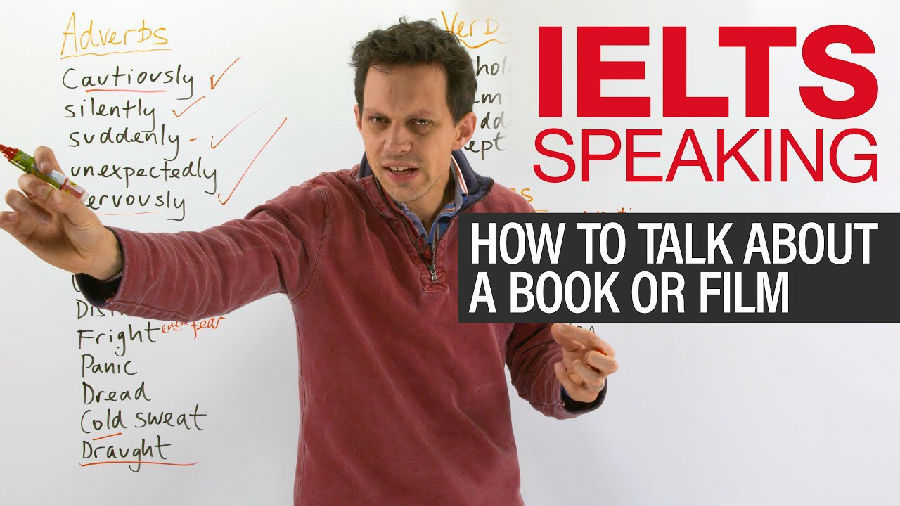
So, what I have put up here on the board is different groups of words,
我在黑板上给大家列出了几组词,
so we've got adverbs, nouns, we've got verbs,
有副词,名词,动词,
and then phrases which you could use in a story of this type.
还有讲述这类故事可以使用的短语。
So, I'm going to demonstrate how to use these words;
下面,我就来给大家演示一下怎么用这些词;
and hopefully, you'll feel inspired to go off and write your own short story afterwards.
希望对大家有所启发,甚至动笔自己写一部短篇。
I'd love to hear about it on the engVid Facebook page or just on your comments under this video.
很期待在我们栏目的Facebook或本期视频下方的评论区看到大家分享这方面的消息。
Okay. So, we're going to link the verbs with the adverbs.
好的,闲话少叙,我们先来看看怎么把右边的动词和左边的副词衔接到一起。
I should, first off, explain what exactly these types of stories are.
首先,我给大家解释一下,这些类型的故事到底是什么样的故事。
So, we're looking at suspense stories.
我们今天讨论的是悬疑故事。
This is a story in which something, something dangerous, something scary remains hidden.
这种故事里会有一些,一些比较危险,比较恐怖的东西隐藏在暗处。
We don't quite know what it is, but there's something out there in the dark that may do something scary. Okay?
我们不太清楚它是什么,但我们敢肯定,黑暗中一定有什么东西,它可能会做出一些可怕的事情。我说明白了吗?
So, in a story like this, people are going to be "holding their breath".
所以,在这种故事里,人们会“holding their breath”(大气都不敢出)。
Yup. "The boy held his breath", if I was to write that in the past tense.
没错。“The boy held his breath”(男孩屏住了呼吸),如果用过去式描述的话就是这样。
Okay? "Held" in the past tense.
好吧。“Hold”用的是过去式“Held”。
"The boy held his breath.
“男孩屏住了呼吸。
He trembled silently because he was on his own.
他默默地发起抖来,因为就他一个人。
He trembled silently, and shuddered." Okay?
他默默地发起抖来,而且浑身都在发抖。”看清楚了吗?
So, let's explain these words.
我们来解释一下这些词。
"Tremble" means to shake. Okay?
“Tremble”意思是发抖。
"Shudder" basically means the same thing.
“shudder”的意思跟“Tremble”差不多。
So, if I say it twice but in a different way, it just adds to the effect. Okay?
如果我同一个意思我用不同的方式表达了两次,效果就会更加强烈。好吗?
"He trembled silently and shuddered with the thought of what lay next door."
“一想到隔壁有什么东西,他就默默地发起抖来,而且浑身都在发抖。”
Okay. If I say exactly what is next door;
是这样的,如果我准确地说出隔壁的东西是什么;
that there's a yellow, spotted lizard, then the story becomes not scary.
点明那就是一只有着黄色斑点的蜥蜴,故事就不恐怖了。
I need to keep the idea that we don't know exactly what is next door.
所以我必须按照我们不知道隔壁究竟有什么东西的思路来讲述。
"He crept", and now let's add another adverb.
“他爬”,我们给它加一个副词。
"He crept"-that would work well-"nervously".
“他爬”——这个词就可以--“紧张地”。
So, "nervously", he's full of nerves;
“紧张地”,就是全身绷紧了弦;
he's, like, biting his teeth about what's going to happen when he steps out into the corridor.
紧张得牙齿打颤那种程度,因为他不知道自己走到走廊里以后会发生什么事情。
"He crept nervously out into the corridor."
“他紧张地往走廊爬去。”
Okay, so I've used my verbs; let's see which other adverbs I could use.
我们来看一下,动词已经有了;下面来看看我还可以用哪些副词。
Okay. What about "cautiously"?
找到了,“cautiously”(谨慎地)怎么样?
So, "caution" is about taking care.
所以,“caution”的意思是小心。
So, if you are being cautious, then you're being very careful.
你很cautious的意思就是你很小心。
If you're acting cautiously, you're doing the same thing.
如果你做事很cautiously,就表示你做事很小心。
"He cautiously looked from left to right."
“他小心翼翼地左右扫视了一番。”
Okay, so we've done "cautiously", we've done "silently", now let's do "suddenly".
现在,“cautiously”,“silently”都已经用了,接下来我们来看“suddenly”(突然)怎么用。
"Suddenly a bat flew past him", so one of those black, nasty, scary bird-like animals flew past him.
“突然一只蝙蝠从他身边飞了过去”,一只黑色、令人讨厌的、可怕的鸟一样的动物从他身边飞了过去。
That's going to be quite scary; we'll have that in there.
是不是听着就很吓人;所以我们要把它也用起来。
"Unexpectedly". Okay. So, prefix "un" means not; "expect" - something we think is going to happen.
“Unexpectedly”,前缀“un”的意思是“不”,“expect”是我们认为会发生的事情。
So, suddenly something we don't think is going to happen happens.
也就是说,突然间,我们认为不会发生的事情,发生了。
Unexpectedly, what could happen?
哪些事情会出乎意料地发生呢?
A door opened.
一扇门打开了。
Dunh-dunh-dunh.
哐-哐-哐。
Okay. So, we've managed to use these adverbs, we've managed to use these verbs.
差不多就是这样。好的,这些副词我们都已经用上了,右边的动词也都用上了。
These are the types of nouns that would be good in a story like this, in a scary story.
下面是讲述这类故事,这类恐怖故事时比较加分的名词。
"Unease". Okay?
我们先说“Unease”这个单词。
So, "ease", you can see the word "easy".
“ease”这个单词,有“easy”的影子吧?
"Everything's cool. Yeah, we can do it. 10 out of 10 in the quiz after the lesson."
ease就是“一切都很好。我们能行。课后随堂测验满分10分我们就能拿10分,”这种感觉。
A feeling of unease is: "Oo, what's happening here? How am I going to get 10 out of 10 in this lesson"?
而unease的感觉就是:“啊?什么情况?这堂课的测验我怎么才能拿到满分10分啊?”就这种感觉。
"Unease", it means discomfort.
所以“Unease”意思就是不安逸。
"Distress".
第二个词是“distress”。
Worry is what "distress" means, and you can add an "ed" to turn it into an adjective.
“distress”就是担心的意思,我们还可以给它加上一个“ed”把它变成形容词。
"The distressed young girl." Okay?
“那个苦恼的年轻女孩。”看明白了吧?
"Fright", this means...fear.
接下来是“Fright”,这个词的意思是……害怕。
Obviously if I wanted to turn it into an adjective, I would put: "ened". "Frightened".
显然,如果你想把它变成形容词,给它加上“ened”就可以了。加上之后就变成了“Frightened”。
"Panic" is: "Ah! Help! What's going to happen? Ahh"!
“Panic”就是:“啊!救命啊!怎么办啊?啊……!”这种感觉。
"Panic" - fear again.
所以,“panic”还是害怕的意思。
"Dread", this is a sense of not liking what is going to happen in the future; being really quite scared.
“dread”,就是不喜欢即将发生的事情的感觉,超级害怕的感觉。
So, you've got lots of different words here to express fear.
这些词都可以用来表示害怕。
A "cold sweat".
再下来是“a cold sweat”。
So, that is a physical...That shows on the body how scared the person is that they're starting to sweat; that the sweat is cold.
这是一种身体(状态)……意思就是一个人已经害怕到开始出汗,出的汗还是冷汗的地步。
I should have a blue pen for this; a cold sweat.
我应该用蓝色的笔来写这个单词;一身冷汗。
So, "sweat", when we're very, very worried and anxious and stressed, we may start sweating.
这就是“sweat”,非常非常担心、焦虑或压力特别大的时候我们可能就会出冷汗。
A "draught", okay?
最后是“"draught",”一股“风”,这是什么意思?
A "draught" is when we have air blowing through under a door, for example. Okay?
“draught”就是从门底的缝隙吹进来的风之类的气流。
It's sort of the wind coming through.
就是风吹过来的感觉。
"A cold draught of air blows through."
“一股冷风吹了过来。”
It just helps to set the scary atmosphere.
这个词也能起到营造恐怖氛围的作用。


