(单词翻译:单击)
Ferran, your question is when we have a permanent base on the moon where will the astronauts get air to breathe?
Ferran 你的问题是如果我们在月球上建一个永久性基地 宇航员们从哪里获得空气来呼吸呢?
I'm sure it makes sense to you that air is something that we consume
我相信你肯定知道空气是人类需要消耗的东西
and it would be a lot of effort to actually bring air tanks from earth and actually launch them up onto the moon.
如果从地球上带空气罐并且把它们发射到太空 需要耗费巨大的精力
One of the questions I can ask you is where do you think the astronauts are getting air right now to breathe on the international Space Station?
我想问你的是 你觉得国际空间站的宇航员们现在是从哪里获得呼吸空气的?
We don't actually take up giant tanks of air to the space station.
我们不会往空间站运送巨型空气罐
They get it from water.
他们是通过水来呼吸的
If you run a very strong electrical current through water you can separate it into hydrogen and oxygen.
如果在水中通上极强的电流 就能把它分解成氢和氧
Oxygen, of course, is the most important gas that we need to breathe.
当然了 氧气就是我们呼吸的最重要的气体
So the way the space station gets air is it takes water and breaks it up into those two gases
所以空间站获得空气的方法就是把水分解成这两种气体
and actually uses the oxygen for people to breathe.
然后为人类提供氧气呼吸
Now we could do the exact same thing on the moon.
在月球上我们同样可以用这个办法
And so your next question would be well doesn't it take a lot of energy to bring water up there as well?
那你接着就会问 把水往太空中运不也会耗费巨大的能量吗?
We would have to bring all these water tanks.
我们得带上那些大水箱
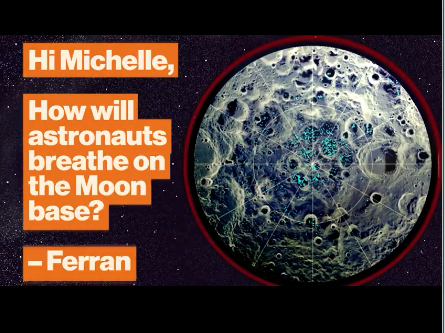
This is one of the reasons we were most excited to find evidence of a lot of ice underneath parts of the moon.
这就是为什么我们在部分月面下发现冰的痕迹之后如此兴奋的原因
Up by the poles of the moon there are craters that are very well shaded from sunlight
在月球两极 有永远都照不到太阳的月坑
and they get very, very cold
那里非常非常严寒
and we found evidence of more water in the lunar soil in those craters near the poles than we ever expected.
我们在两极附近的月坑里的月壤中发现了更多水存在的证据 这在意料之外
That means if you had astronauts up there and you actually have the bases near the poles of the moon
这就意味着 如果把宇航员送到月球上 并且把基地设在月球两极附近
there would be stores of ice and therefore water that you could actually tap into.
就会有源源不断的冰源和水源供人使用
You could actually turn that water into air for the astronauts to breathe
你可以把那些水转换成空气供宇航员呼吸
without ever bringing anything up from the earth.
无需从地球上运送任何东西
You could actually be independent on the moon itself.
你可以在月球上独立生存
And there's another really important thing that you can make out of water
把水分解成氧和氢 还能制造出另一种特别重要的东西
by separating it into oxygen and hydrogen and that's rocket fuel.
那就是火箭燃料
Rocket fuel today, liquid rocket fuel is the combination of liquid hydrogen and liquid oxygen.
现在的火箭燃料 液态火箭燃料是液态氢和液态氧的混合
So not only would you have air to breathe from the water, but you could make your own fuel.
所以你不仅可以从水中获得呼吸空气 还能给自己提供燃料
This is one of the things that we're investigating now, not only colonizing the moon
这是我们目前正在研究的一个领域 不仅仅是殖民火星
but also thinking about sending people to Mars.
还要考虑将人类送到火星上
You send people so far away they have to be independent and the even have to make their own fuel to get back.
把人类送到如此遥远的地方 他们必须得能够独立 甚至还要自己造出能返回地球的燃料
And we think we can do that if we can find water.
如果能找到水 我们就能实现这些
One of the great questions is why would there be ice on the moon?
一个很好的问题是月球上为什么会有冰?
The moon seems very dry, there's no atmosphere, how could there be water even frozen underneath the soil?
月球看似异常干燥 没有大气层 月壤下怎么会有结成冰的水呢?
Well, we think that what's happened over billions of years is that many different comets and asteroids have collided with the moon.
我们认为 亿万年以前 很多彗星和小行星与月球相撞
You can see all the craters on the surface.
大家可以看到月球表面的那些月坑
And asteroids and comets both contain a decent amount of water.
而小行星和彗星都含有大量的水
Now, most of that water probably just got vaporized and flew off the moon entirely,
也许多数水分已经蒸发 从月球上消失了
but some of it actually turned into ice.
但其中一部分却变成了冰
And the important thing about these deep craters near the poles is that they are shaded from sunlight.
两极附近的这些深月坑很重要的一点是它们晒不到太阳
Sunlight would actually just disperse that ice and actually turn it into vapor,
阳光会把冰消融 然后变成蒸汽
but in the dark shadowy craters the ice accumulates over time
但在黑暗阴凉的月坑中 这些冰会日渐积累
and so you actually have a buildup of ice underneath the soil.
所以月壤下的冰其实是在逐渐增加的


