(单词翻译:单击)
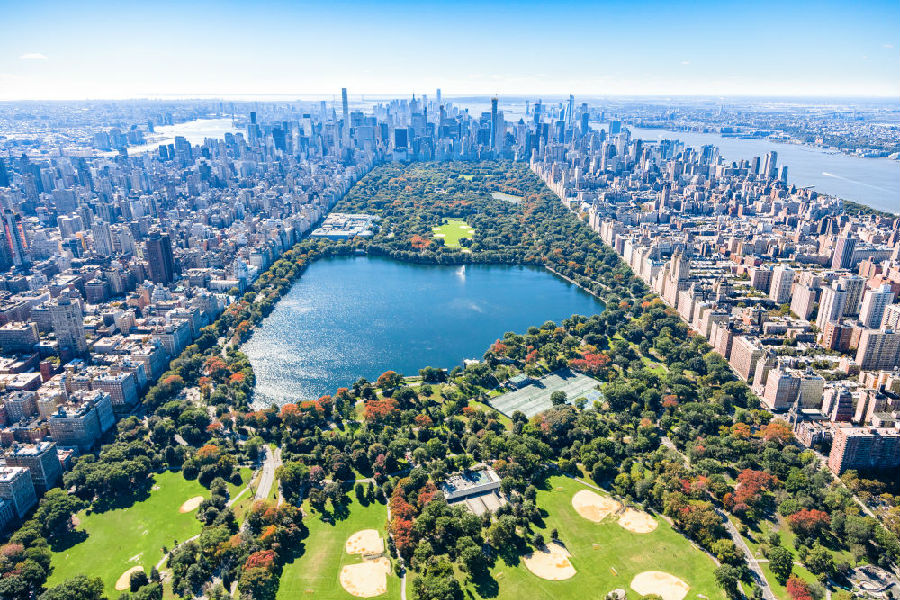
This is Central Park.
这里是中央公园。
It’s an iconic part of New York City.
纽约市的标志性地块。
A piece of nature, tucked inside Manhattan.
这是藏于曼哈顿闹市的一片大自然。
If you’ve lived in New York, or even visited, you’ve probably been here.
如果你在纽约住过,或哪怕只是去过纽约,那你都可能已经来过这里了。
But, there’s a part of this land’s story that visitors will never see.
不过,这片土地有一段游客永远也不可能看到的历史。
It’s the story of what was here before the park.
那就是这个公园建成之前的故事。
And the community that was destroyed to make way for it.
还有为了给它腾地而被摧毁的社区的故事。
In the 1820s, New York City looked like this.
19世纪20年代的纽约市长这样。
Most people lived in this area — Lower Manhattan.
大多数人都住在这个地区——曼哈顿下城。
Pretty much everything above it, was yet to be settled.
除了下城,北边的一切都还是待定状态。
In this map, you can see how different the geography was.
我们可以从这张地图看到,纽约上下城的地理形态也很迥异。
These little lines illustrate what used to be hills in Manhattan.
这些小线条描绘的是曼哈顿过去的丘陵。
This was the countryside.
这里就是曼哈顿的乡村。
Downtown was the opposite.
市中心则正好相反。
Lower Manhattan was dense and crowded.
曼哈顿下城人口稠密,非常拥挤。
A few small neighborhoods were home to many of the city’s poor whites, and immigrants.
几个规模不是很大的社区住着该市的贫穷白人和移民。
and also, to much of its black population.
还有该市的大部分黑人。
This document shows the number of slaves in New York State.
这份文件显示的是纽约州的奴隶数量。
You can see how it went down gradually, from 20,000 in 1800, to 10,000 in 1820, and finally to just 75 in 1830.
可以看到,这个地方的奴隶人口是在逐渐下降的,从1800年的2万人下降到1820年的1万人,最后到1830年的75人。
That’s because in New York, slavery wasn’t abolished all at once.
这是因为纽约州的奴隶制并不是一夜之间被废除的。
Instead, it was ended gradually over about 30 years.
整个过程用了大约30年的时间。
And as more free black people joined the work force, racial tensions rose.
随着越来越多的自由黑人进入劳动力市场,种族紧张的局势开始加剧了。
"The people who were enslaved were now in competition with people coming over for jobs."
“曾经被奴役的人跟前来找工作的人形成了竞争态势。”
That tension led to violence — and lower Manhattan became increasingly dangerous for free black people.
紧张局势逐渐演变成了暴力——在自由黑人眼里,曼哈顿下城已经成了一个越来越危险的地方。
Then, in 1825, plots of land started to go up for sale here, uptown.
接着,1825年,这里,也就是上城的土地开始挂牌出售了。
It was a way out.
也算是一条出路。
A black man named Andrew Williams decided to buy three lots.
一位名叫安德鲁·威廉姆斯的黑人决定买三块地。
"You know, word gets out, black people, seeing other black people and say,
“一传十十传百,黑人们看到其他同伴就会说,
'Oh there's a little bit of a community developing here, maybe we can just fold into this community,'
‘哎,这里正在建一个小社区,或许我们也能加入呢,’
so they start to move in."
于是,他们开始搬了进来。”
After Williams, more lots filled up with black families and churches.
威廉姆斯(买了三块地)之后,越来越多的黑人家庭和教堂在上城落地生根。
And it was here, between 82nd and 89th Street, that the community of Seneca Village was born.
就是在这里,在第82街和第89街之间,塞内卡村社区诞生了。
Moving up to Seneca Village offered black families, an affordable, safe place.
搬到北边的塞内卡村,当地的黑人家庭便有了一个负担得起的、安全的住所。
It also gave them the chance to vote.
投票的机会也有了。
Black men could only vote in New York if they owned property.
在纽约,只有拥有地产的黑人男性才有资格投票。
Over the course of the next three decades, the community grew to nearly 300 residents.
在接下来的三十年里,这个社区发展到了近300名居民。
Records from the census show that they were laborers, domestic workers, waiters, and shoemakers.
人口普查记录显示,他们从事的都是劳工、家政工人、服务员和鞋匠等工作。
And they built dozens of homes, three churches, and a school for black students.
他们修建了几十座房屋、三座教堂,还有一所供黑人孩子上学的学校。
Later, when Irish and German immigrants started moving into Seneca Village,
后来,爱尔兰移民和德国移民开始迁入塞内卡村,
it became unique for another reason.
这个社区的独特性又增加了一个维度:
"It was an integrated community.
“这里成了一个种族大融合的社区。
It seems that people of all ethnicities were likely getting along based on the church records that were here."
当地的教堂记录显示,当地不同种族的人相处得似乎都很融洽。”
Among the documents, are evidence that some white and black families attended baptisms together,
在这些文件中,有证据表明部分白人和黑人家庭会一起参加洗礼,
were buried next to each other in the same cemetery, and intermarried.
死后埋葬在同一片墓地,还会彼此通婚。
"The people who lived in this area were individuals who were trying to find a new way of life."
“搬到这里来住的人都是想要奔向新生活的人。”
Over the next three decades, the population of New York City nearly quadrupled.
接下来的三十年里,纽约市的人口几乎翻了两番。
Lower Manhattan could no longer hold everyone.
曼哈顿下城再也无法容纳下所有人了。
The city’s white elite were worried that the entire island would be consumed by development.
当地的白人精英担心曼哈顿岛会被开发吞噬。
They said it called for the necessity of a city park, to "give lungs to the city".
他们说,这一问题凸显了规划一个城市公园,“给这座城市装一个肺”的必要性。
"This came out of the elite being able to start to travel to Europe and they see the Champs Elysees and they see Kensington Park
“想出这一主意的正是那些这些精英。他们当时就已经能到欧洲旅游,看过了香榭丽舍大道,肯辛顿公园,
and they think that the city deserves to have a park of that stature."
他们就觉得,纽约也值得拥有这样级别的城市公园。”
On July 21, 1853, New York set aside 750 acres of land to create America’s first major landscaped public park.
1853年7月21日,为了修建美国第一个大型园林公园,纽约拨出750英亩土地。
"The Central Park."
“中央公园。”
But the proposed area for the park included Seneca Village —
问题是,塞内卡村,以及其他数千块地,这些地方一共住着大约1600人——
along with thousands of other lots of land, home to about 1600 people.
正好位于规划的中央公园地块之内。
In order to facilitate the park’s development, the city’s newspapers started to downplay who really lived there.
为了方便公园的开发,当地的报纸开始贬低住在公园地块上的人了。
"They really describe these people as living in shanties and shacks, people of debased cultures were living off the land."
“当地的人在他们口中就变成了住着棚屋,过着面朝黄土背朝天的一群低俗之人。”
But that wasn’t true.
问题是,事实并非如此。
In 2011, Cynthia and a team of archaeologists excavated in the former Seneca Village site.
2011年,辛西娅和一群考古学家对塞内卡村遗址做了挖掘。
They came away with 250 bags of objects to analyze, which now live here,
他们带走了250袋待分析的物品,这些物品现在存放在了
in New York City’s Archaeological Repository.
纽约市考古资料库这里。
These objects suggest that Seneca Village was wealthier than many assumed.
这些文物表明,塞内卡村要比许多人想象的富有。
"When we compared the objects from the homes of the people in the village
“我们把塞内卡村民家中的物品
with artifacts from Greenwich Village, an elite upper middle class neighborhood.
与格林威治村,一个中上阶层精英社区的手工艺品做了比较。
In some cases, they were using the same kind of ironstone plate in what was called the Gothic pattern."
有时候,他们用的还是同一种铁矿石烧成的,带有所谓的‘哥特纹’的盘子。”
"Quite a few pieces of porcelain in Seneca Village and porcelain was an expensive ware."
“塞内卡村有相当多的瓷器,瓷器还是比较昂贵的器皿。”
They also found other objects — like a comb, a smoking pipe, roasting pan,
他们还发现了其他物品——比如梳子,烟斗,烤盘,
and part of a toothbrush that probably didn’t belong to poor people.
和一把断了的牙刷,这个看着就不太像是穷人会有的东西。
"Toothbrushes were not common among the working class as well as the middle class until around 1920."
“1920年之前,牙刷在工人阶级,中产阶级中间都是不太常见的。”
And the artifacts themselves were only one part of their analysis.
不过,这些文物还只是他们分析的一部分。
"For example, from the census records from 1855, we know that there was a very high level of education."
“例如,看了1855年的人口普查记录,我们就知道,他们当时的教育水平是非常高的。”
"Getting a high school education was clearly an important factor in the community
“很明显,接受高等教育是他们社区的一个重要特征,
and that’s very much a part of middle class identity."
而接受高等教育很大程度上也是中产阶级的标志。”
The findings indicate that Seneca Village wasn’t a shantytown.
这些调查结果都表明,塞内卡村并不是一个棚户区。
It was a working and middle class community,
这是一个工薪阶层和中产阶级社区,
a growing neighborhood of black property owners, and an experiment in integration.
一个不断在扩大的有产黑人社区,一个民族融合的试验基地。
But to the white New York elite of 1856, it wasn’t worth saving.
但对于1856年的纽约白人精英来说,就算是这样,塞内卡社区也不值得保留。
A July 1856 article in the New York Times referred to it with a slur.
1856年7月《纽约时报》刊登的一篇文章就对该社区进行了诽谤。
“The Ebon inhabitants, after whom the village is called...have been notified to remove by the first of August.”
“同名村庄的埃本族居民已经接到通知,计划在8月1日前搬走。”
Many residents fought to keep their land by filing objections to their forced removal.
许多居民都提出了反对强行搬迁的意见,努力想要留住他们的土地。
But Seneca Village — along with the other settlements on the land for Central Park -- was seized and destroyed.
最后,塞内卡村——连同中央公园规划地块上的另一个定居点——还是被强征并摧毁了。
In their place, the city made pathways, built bridges and arches, and planted thousands of trees.
市政府在他们的土地上修建了道路,修建了各种造型的桥梁,还种植了成千上万棵树。
Central Park was done, and Seneca Village was gone forever.
中央公园落成,塞内卡村则一去不复返了。
"We can't imagine New York City without Central Park.
“我们无法想象没有中央公园的纽约会是什么样子。
But I'm finally grateful that the recognition of the pre-park history has emerged."
但我终究还是要感谢大家,感谢大家已经有了承认公园修建前那段历史的意识。”
Today, New York is starting to reckon with this part of its history.
如今,纽约也开始正视这段历史了。
An exhibition with information about Seneca Village is temporarily up in the park.
公园正在举办一场关于塞内卡村的展览。
But the real legacy of Seneca Village is a story that’s repeated itself again and again, in cities everywhere.
但塞内卡村真正的后遗症是一个仍在不断重复上演,世界各地的城市都在反复上演的一个故事。
"Land, property ownership, that's how you get wealth and you pass wealth on from generation to generation.
“土地,财产所有权,这就是大家获取财富,将财富代代相传的门路。
But you’re getting a bulldozer that comes through
但现在,一辆推土机冲你开了过来,
because a new highway has to come through or a new hospital or development site has to come in.
因为有一条新的高速要从你这儿过,或者一家新的医院,新的工地要从你这儿过。
Seneca Village was no different.
塞内卡村和这种情况并没有什么两样。
It's time that we own it and we come to recognize that there are these great stories that live beneath the surface of the park.
现在,我们是时候承认它,承认这个公园的下面埋藏着这样非凡的故事。
It's not just African-American history.
因为它不只是非裔美国人的一段历史。
It's just American history."
它也是所有美国人的历史。”


