(单词翻译:单击)
听力文本
Lung cancer kills more people than any other form of tumour. About nine out of ten people die within five years of being diagnosed with the disease. If the cancer is caught very early most patients could be cured. But doctors struggle to diagnose early because there are no symptoms until the cancer is in its late stages and has spread to other organs.Some experts think that doctors should screen people at high risk to find lung cancer before symptoms appear. The national lung-screening trial in America subjected 53,000 current and former heavy smokers to either X-ray or computed-tomography scans every year for three years.
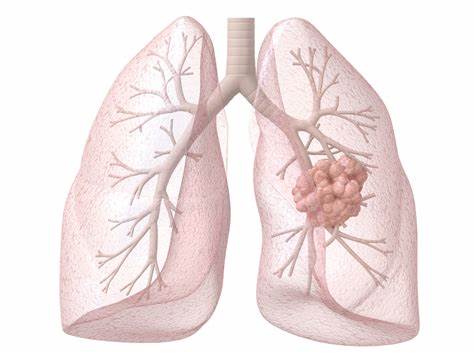
Its results, reported in 2011 found that screening with CT scans did save lives. But there was a problem. Too many of the lumps found during the screening were not cancer. This is known as a false positive. False positives can harm patients who undergo dangerous follow-up procedures such as biopsies, even if they do not have cancer.It can also affect their mental health and false positives add to the cost of health care. According to new data from the World Health Organisation these harms can be greatly reduced by following a different protocol. Instead of treating all lumps as a positive result doctors are now advised to ignore the smallest nodules and treat them as a negative result. This has halved the rate of false positives.Out of every 1,000 people who were scanned 356 people required follow-up testing under the old protocol. With the new protocol, that has fallen to 180.Complications from follow-up testing have also been reduced. These results show promise. Many countries are waiting for the full report of another trial called Nelson before deciding whether to set up fully fledged screening programmes. Preliminary data from the Nelson trial suggest that screening reduces the death rate from lung cancer among high-risk men by 26% and 61% in women.If a balance between the cost and benefits of screening can be found, lung cancer need no longer be a death sentence.
关注公众号知问导图,回复TEX,免费获取本期内容详解等更多精彩内容。
重点词汇解析
diagnose vt.诊断; 判断; vi.做出诊断;
Each year in the United States, about 237,000 cases of breast cancer are diagnosed in women and about 2,100 in men.
在美国,每年约有237,000例乳腺癌被诊断为女性,约2,100例为男性。
参考翻译
肺癌杀死的人比任何其他类型的肿瘤都多。大约十分之九的人会在确诊后五年内死亡。如果能及早发现癌症,大多数病人都能治愈。但是,医生们很难及早诊断,因为在癌症发展到晚期并扩散到其他器官之前,没有任何症状。一些专家认为,医生应该在出现肺癌症状之前对高危人群进行筛查,以发现肺癌。在美国进行的全国肺筛查试验中,每年会对53,000名目前和以前的重度吸烟者进行X光或计算机断层扫描,并为期三年。2011年报道的结果发现,用CT扫描进行筛查确实挽救了生命。但有个问题。在筛查过程中发现的肿块中有大多不是癌症。这就是所谓的假阳性。假阳性会伤害那些接受危险的后续手术的病人,比如活检,即使他们没有患上癌症。这也会影响他们的心理健康,假阳性会增加医疗费用。根据世界卫生组织(World Health Organization)的最新数据,通过遵循不同的协议,这些危害可以大大减少。现在建议医生不要把所有肿块都当作阳性结果来治疗,而忽略最小的结节,并将其视为阴性结果。这使得假阳性率减少了一半。每1000名接受扫描的人中,有356人需要根据旧协议进行后续测试。随着新协议的出台,这一数字已降至180。后续测试的并发症也减少了。这些结果表明是有希望的。许多国家正在等待另一项名为Nelson试验的完整报告,然后才决定是否建立全面的筛查方案。Nelson试验的初步数据表明,筛查可将高危男性肺癌的死亡率降低26%,女性降低61%。如果能在筛查的成本和效益之间找到平衡,肺癌就不再是死刑了。


