(单词翻译:单击)
In 2003, astronomers discovered an exoplanet named PSR 1620-26 b.
2003年,天文学家发现一颗名为PSR 1620-26 b的外星行星。
It doesn't have a fancy name, and it's likely just another gas giant, this time, at about two times the mass of Jupiter.
它的名字并不炫酷,它也很有可能只是又一颗气体巨星罢了,只是质量大约是木星的两倍。
It probably even formed like all other exoplanets out there.
很有可能组成也跟其他外星行星相似。
But for scientists, this planet is anything but normal.
但对于科学家来说,这颗行星与众不同。
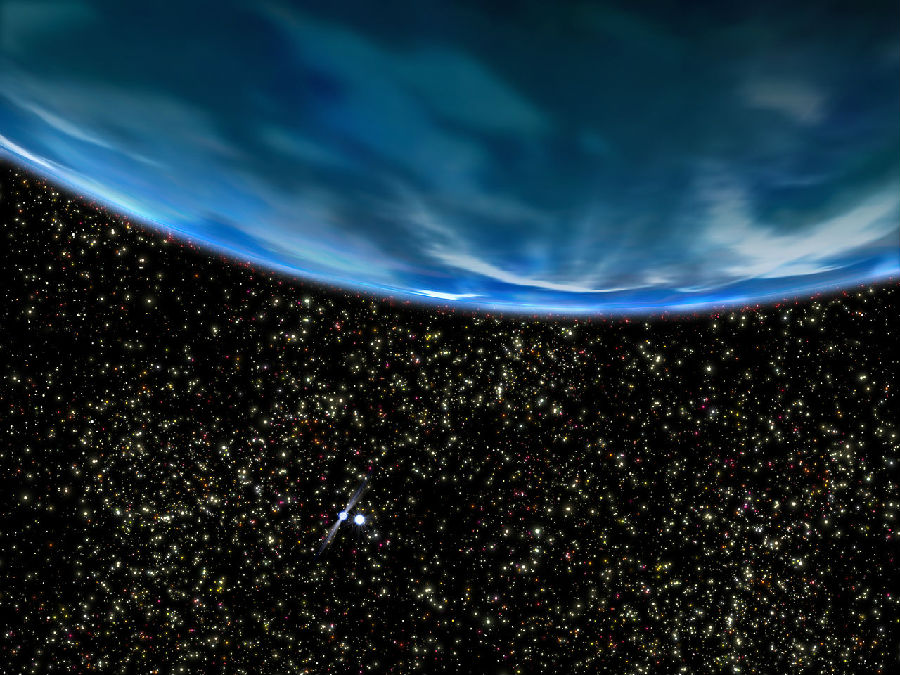
Even fifteen years after its discovery, researchers believe it's still the oldest confirmed planet we've ever found.
即便在它被发现的15年后,研究人员依然认为这颗星体是人类发现的最古老的行星,没有之一。
Evidence suggests that it's 12.7 billion years old, barely a billion years younger than the universe itself.
有证据表明,这颗行星有127亿年大,比宇宙只小10亿年。
And that had a lot to teach us about planetary formation.
通过它,我们能了解到很多有关行星的知识。
Although this planet wasn't discovered until the 2000s, its story, at least in human history, really started in the 1980s.
虽然21世纪才发现这颗行星,但它的历史(至少是在人类记载中出现的历史)从上世纪80年代就开始了。
In 1988, researchers began studying an object in a neighborhood called Messier 4, or M4.
1988年,科学家开始研究其附近的一个物体,即M4星团。
It's a globular cluster, a very dense group of stars, about 5500 light-years away.
M4是球状星团,其内部恒星密度极高,大概5500光年的距离。
M4 has more than 100,000 stars, but this time, scientists were investigating a pulsar called PSR 1620-26.
M4内有10万多颗恒星,但这次,科学家研究的是一颗叫PSR 1620-26的脉冲星。
Pulsars are the remnants of explosive supernovas.
脉冲星是超新星爆炸后的残余物。
They emit beams of radiation and spin really quickly, like super fast lighthouses.
脉冲星可以放出辐射,转速极快,就像一个超快的灯塔。
And as that beam sweeps across Earth, we see the star flash at extremely regular intervals.
由于其辐射会扫过地图,所以我们可以看到恒星以非常规律的间歇闪光。
That's how the pulsars got their name.
所以脉冲星才有这样一个名字。
Except, the timing of this pulsar's flashes wasn't quite so regular.
不过,脉冲星闪光的时间点不是很规律。
They were just a little bit off, and that suggested there was something orbiting the star, its gravity tugging the pulsar a little this way and that and affecting those predictable signals.
会给人一种脱离组织的感觉,而这表明一定有什么物体环绕其飞行,所以其引力作用会来回拉扯脉冲星,并影响本来可以预测的闪光信号。
So astronomers got to work. And after multiple years of observation and a lot of math, they were eventually able to identify not one, but two objects around the pulsar.
所以,天文学家从这个点切入。在经过多年的观测和数学计算后,他们终于能发现了脉冲星附近不止一个物体,而是两个物体。
The first was a white dwarf, which formed out of a mid-sized star like the Sun.
其中一个是白矮星,这种星体是从像太阳一样的中等恒星中形成的。
It's estimated that M4 contains more than 40,000 white dwarfs, so this wasn't that unusual.
据估测,M4星团里有4万多颗白矮星,所以这就不太正常了。
The second object, though, was a planet.
发现的第二个物体是一颗行星。
And that was a lot more unexpected.
这就更加不可思议了。
See, by 2003, astronomers had started finding exoplanets all over the place, and we'd even found a few orbiting another pulsar.
为什么呢,因为到2003年为止的时候,天文学家开始在很多地方发现外星行星,甚至在另一颗脉冲星附近也发现了一些外星行星。
But no one had ever found a planet in a globular cluster, and many scientists weren't sure it was even possible.
但在球状星团里从未发现过行星,所以很多科学家不太确定是否会发现。
Gravitational interactions in places like M4 can rip baby planets apart, and with tons of stuff flying around, there are lots of major impacts.
M4这样的星团里会有许多引力作用,这种作用会将刚形成没多久的行星撕裂开来,而由于其周围有很多物质存在,所以会产生重大影响。
It's just not a great place for planets to form, except, this one managed to survive.
这里的环境不太适合行星生存,不过还是有一颗行星得以存活下来。
Today, it's actually still the only known planet we've seen in a globular cluster.
如今,这颗行星依然是我们在球状星团中发现的唯一一颗行星。
Somehow, though, that still wasn't the strangest thing about finding a planet in M4.
不过,关于在M4星团中寻找行星这件事,这并不是最诡异的地方。
What was even weirder is that this neighborhood is really old, about 12.7 billion years old.
更诡异的是:这行星年龄很大,大概有127亿岁了。
According to what we know about cluster formation, that means the stars within this group are equally ancient.
根据我们对星团形成所了解的情况,这表明,该星团内的恒星都来自很远的以前。
And by extension, so are any planets around them.
推演一下的话,周围的所有行星也都来自很远的以前。
Even now, we're still figuring out exactly how planets form, but the general consensus says that they form out of the disk of matter that orbits a young star, as the matter starts glomming together and kind of snowballing.
即便是现在,我们还是没有弄清楚行星形成的方式,但大家认同的一般说法是:行星是从环绕年轻恒星的圆盘物质中形成的。过程中,这些物质会粘合在一起,像滚雪球一样越滚越大。
This is called the core accretion model.
这就是核心吸积模型。
This process is supposed to happen soon after a star is born, so planets and their host stars have about the same age.
这个过程应该是在恒星形成后不久发生的,所以行星和他们的主恒星年龄差不多大。
So since most of the stars in M4 are nearly 13 billion years old, it follows that this pulsar planet is, too.
所以,鉴于M4星团中的大多数恒星都是近130亿岁,那么这颗脉冲行星应该也是如此。
And that makes it likely the oldest planet ever discovered.
这就使该行星成为目前发现的年龄最大的行星了。
That's more than just another record, though. It also has a lot to teach us about the early universe.
这不仅是一项记录,也让我们了解了初期宇宙的许多情况。
See, the thing about the core accretion model is that, if you're going to form a planet by snowballing stuff, you need to have a lot of heavy, diverse elements.
核心吸积模型就是这么回事:要通过滚雪球的方式形成一颗行星,就需要很多质量大、多样化的元素。
Even gas giants are more than your basic hydrogen and helium.
即便是气体巨星也不只包含氢和氦元素而已。
But it's not like those heavy elements have existed since the Big Bang.
但看起来又不想大爆炸之后就有了这些重元素。
Instead, it took millions of years for them to form.
相反,需要几百万年才能形成。
They only began to exist as stars were born, fused lighter elements together, and then spit out the heavier products when they died.
只有恒星形成后才会形成,然后许多质量较轻的元素会聚合在一起,在消亡时形成重元素。
And that's why finding this pulsar planet was such a big deal.
因此,这颗脉冲星才会如此重要。
It was the first piece of physical evidence announcing that, nearly 13 billion years ago, there were enough heavy elements to start forming planets after all.
这是一个实实在在的证据,可以表明:在近130亿年前,有足够的重元素可以形成行星。
It confirmed something researchers had been thinking about for years, and it also hinted that there could be other ancient worlds out there, too.
这颗脉冲星证实了研究人员多年来思考的问题,还提供了思路,即那附近可能还有来自远古的物体。
Since 2003, astronomers have found more old planets, but none of them have been able to topple this record.
自2003年以来,天文学家发现了更多古老的行星,但没有一颗能打破这项纪录。
But from what we now know, they should be out there.
但根据我们目前了解的情况,那里应该还有这样的物体。
So we'll just have to keep looking.
所以我们会持续观望。
Thanks for watching this episode of SciShow Space!
感谢收看本期的《太空科学秀》!
We love scouring the research for the weirdest, most surprising, and most awe-inspiring stuff out there, but we'd love to hear what you want to learn about, too.
我们喜欢研究最奇怪、最令人吃惊和敬畏的东西,不过大家感兴趣的也是我们想要了解的。
If you have a suggestion for future SciShow Space videos, go ahead and leave them in the comments, and we'll look into it.
如果您对《太空科学秀》栏目有什么建议,可以留在评论器,我们一定会看的。
And as always, you can keep up with the latest videos by going to youtube.com/scishowspace and subscribing.
还是那句话,可以订阅youtube.com/scishowspace来了解最新的视频哦。


