(单词翻译:单击)
These are 3 red wines that are made from the same grape, but at different prices.
这些是由同一种葡萄制成但标价不同的3种红葡萄酒。
The most expensive is a 2011 Honig cabernet sauvignon from Napa Valley.
最昂贵的是2011年产来自纳帕谷的哈尼格赤霞珠苏维翁。
Wine Spectator magazine rated it Outstanding.
这款酒被《红酒观察者》杂志评为品质杰出的一款葡萄酒。
And it cost 5 times more than the one on the right.
其价格也比右边的高出5倍。
So does it taste 5 times better?
那它的味道是不是也比右边的好五倍呢?
19 Vox staffers tasted and rated each of the wines.
19名Vox员工对这三款葡萄酒中的每一款都做了品尝和点评。
And almost half of them correctly identified the most expensive one.
几乎一半的测试者都正确地分辨出了最贵的那一款。
But that’s not because they liked it more.
但这不是因为他们更喜欢它。
Very nuanced. Complex. Didn't enjoy it.
“口感非常微妙,很复杂,我并没有很享受。”
The average ratings of the cheapest and most expensive wine were actually the same.
事实上,最便宜和最昂贵的葡萄酒的平均得分实际上是一样的。
I'm glad I have cheap taste. That's going to make my life really easy.
“我很庆幸我的味觉比较廉价,这样生活容易多了。”
And this is consistent with a 2008 study that compiled 6,000 blind tastings in the US.
我们的测评结果与2008年美国进行的一次6,000人盲品的研究一致。
It found that unless they had undergone wine training,
该研究发现,除非受试者接受过葡萄酒培训,
people didn’t actually prefer the taste of more expensive wines.
否则人们并没有偏爱更昂贵的葡萄酒。
In fact they enjoyed them slightly less.
事实上,昂贵的葡萄酒的受欢迎程度反而比便宜的低一点点。
Yeah, that's really not very pleasant.
“嗯,这个味道确实不怎么好。”
There seems to be something about wine that can make us feel a bit lost.
葡萄酒似乎带有一定的迷惑性。
“That has sort of an oaky afterbirth."
“这一款的后味有点儿橡木桶的味道。”
That’s probably why a single movie can move the whole wine market.
这可能就是为什么一部电影就能够推动整个葡萄酒市场的原因。
“That's tasty.”
“味道不错。”
“That’s 100% pinot noir. Single vineyard. They don’t even make it anymore.”
“这是纯正的黑比诺葡萄,只用了这一种葡萄酿制而成,只是现在已经停产了。”
After Sideways was released, sales of Pinot Noir jumped up compared to other red wines.
《杯酒人生》上映以后,相比其他红葡萄酒,黑比诺葡萄酒的销量陡增。
And sales of merlot?
那梅乐的销量呢?
“I’m not drinking any f*cking merlot.”
“我再也不会喝tnd梅乐了。”
They slowed down.
梅乐的销量变少了。
But who decides what good wine is?
但谁决定哪种酒蒜好酒呢?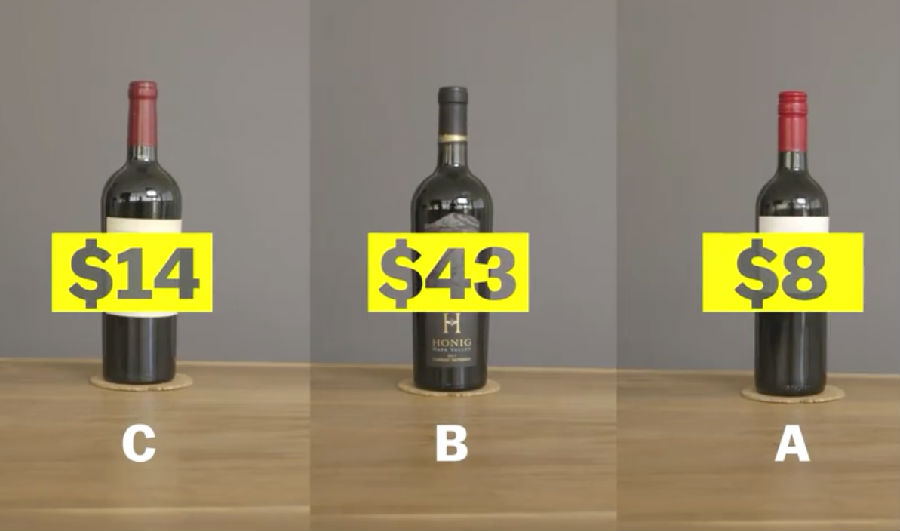
Professional judges give medals in wine competitions, but they’re really inconsistent.
专业评委在葡萄酒比赛中评奖,但他们给出的评价却不一致。
One statistician showed that most wines that received the highest score in one competition also got the lowest score in another.
一位统计学家表示,大多数葡萄酒在这场比赛中得分最高,在另一场比赛中得分往往最低。
This is the distribution of gold medals that you would expect if they were awarded by random chance.
如果奖牌的评选完全是随机的话,金牌的分布情况应该是这个样子。
It looks a lot like the actual distribution of gold medals in US wine competitions.
这一数据和美国葡萄酒竞赛中金牌的实际分布非常吻合。
That suggests that judges often disagree with each other.
这表明评委们往往各持己见。
But it gets worse: they often disagree with themselves.
但这还不算,评委们往往自己都前后不一。
When surreptitiously given the same wine 3 times, only 1 in 10 of the judges at the California State Fair wine competition consistently awarded it the same medal.
在加利福尼亚州博览会葡萄酒竞赛上,只有十分之一的评委在对同一葡萄酒进行三次评测时给出的奖牌是前后一致的。
Wine ratings published in magazines can be all over the map too.
杂志发布的葡萄酒评比结果也可能千差万别。
Here’s how two of the top critics described the same wine in 2004.
这是2004年两位顶级品评家对同一款酒的评价。
“A brilliant effort” “completely unappetizing”
“杰出的产品”“完全无法引起人的欲望”
“a wine of sublime richness” “overripe aromas”
“一款口感非常丰富的葡萄酒”“太香了”
“remarkable freshness and definition”
“口感十分新鲜,分辨力十足”
“more reminiscent of a late-harvest zinfandel than a red bordeaux.”
“让人想起的是用较晚采摘的葡萄酿成的仙粉黛葡萄酒,而不是红葡萄酒。”
One problem is that not all wine publications require tasters to be blind to the price and the brand.
问题是,并非所有的葡萄酒刊物都在评测时对品尝者保密价格和品牌。
And that matters because people can’t seem to avoid associating price with quality.
价格和品牌很重要,因为人们似乎无法避免将价格与品质联系在一起。
One experiment in Australia showed that people rated the same wine higher when they thought it was $53 rather than $16 or $6.
澳大利亚的一项实验表明,当人们认为价格是53美元而不是16美元或6美元时,他们对同一种葡萄酒的评价更高。
But get this - the experimenters had actually made that wine objectively worse by adding tartaric acid.
但注意了 - 实际上,实验者们已经通过添加酒石酸破坏了酒的口感。
It didn’t matter -- the price tag overwhelmed their own taste buds.
但这并不重要 - 价格标签还是战胜了受试者的味蕾。
In another study, scientists scanned the brains of people tasting wines they thought were either $10 or $90.
在另一项研究中,科学家对品尝他们认为是10美元或90美元的葡萄酒的人的大脑进行了扫描。
In reality, it was the same wine,
事实上,两款葡萄酒是一样的,
but when they thought it was expensive, their brains showed more activity in a region associated with pleasant tastes and smells.
但是当他们认为它很贵时,他们大脑处理愉悦的味道和气味的区域会更活跃。
so expensive wines may actually taste better after all, as long as you know that they’re expensive.
所以,昂贵的葡萄酒可能实际上口感更好,只要你知道它们很贵。
You can feel free to finish it if you want. "I'll take the expensive one."
“想喝的话可以喝完哈。” “那我喝这个贵的。”


