(单词翻译:单击)
Hello, I'm Mia.Welcome to Oxford Online English!In this lesson, you can learn about how to use interjections in English.
嗨,我是 Mia.欢迎来到 Oxford Online English!本节课,你会学习关于如何在英语中使用感叹词。
What are interjections?Let me explain: What would you say if I told you my cat had died?
什么是感叹词?让我来解释一下:如果我告诉你我的猫去世了,你会说什么?
How about if I told you I'd won the lottery?What would you say?Perhaps you'd say something like: "Oh no!"
如果我告诉你我中了彩票呢?你会说什么?或许你会说:“噢不!”
Or: "Oh my god!"These short phrases are called interjections and we often use them in English.
或者:“我的天呐!”这些短语就被称为感叹词,英语中我们经常使用它们。
In this lesson, we'll look at how to use interjections to react to different situations.
本节课,我们讲学习如何针对不同的情境使用感叹词。
You'll learn how to use them and how you can use them to sound more natural in English.
你将学习如何使用它们以及如何在让它们听起来更自然。
Let's begin!Part one: what is an interjection?So, what is an interjection?
让我们开始吧!第一部分:什么是感叹词?所以,感叹词是什么?
Interjections are actually very easy; they're words or phrases that expresses your emotions or feelings.
感叹词实际上很简单;它们是一些单词或者短语,用来表达你的情绪或感觉。
So, an interjection can stand by itself.For example: "Wow!"
所以,感叹词可以单独使用。比如说:“哇喔!”
Or, they can be placed at the beginning of a sentence, like this: "Wow, that's great!"
或者也可以在句首使用它们,比如:“哇喔,那太棒了!”
They can go at the end, too, like this: "That's great, wow!"
它们也可以放在句末,比如:“那太棒了,哇喔!”
In longer sentences, you can even put the interjection right in the middle: "That's great, wow, you did so well on your exams!"
在长句中,你甚至可以把感叹词放在句中:“那太棒了,哇,你考得真好!”
We mostly use interjections in speech, not in written language.
我们常常会在演讲中使用感叹词,而不会在写作中使用。
When you use an interjection, you should pause before and/or after the interjection.
当你使用感叹词时,要在感叹词之前和之后有一个停顿。
Don't say: "That's great wow you did so well on your exams!"Say: "That's great, wow, you did so well on your exams!"
不要说:“那太棒了哇你考得真好!”说:“那太棒了,哇,你考得真好!”
A lot of interjections are used to show strong emotions, whether positive or negative, for example, love, hate, surprise, boredom, anger and many more.
很多感叹词被用于加强语气,不管是正面的的还是负面的,比如,爱,恨,惊喜,厌倦,愤怒以及很多。
For this reason, your intonation when you use interjections is very important.You need to use intonation to express the emotion.
在本节课,你使用感叹词时的声调至关重要。你需要用声调来表达情绪。
Listen to these sentences: "You passed your exam, great.""Oh no, what terrible news."
听这些句子:“你通过了考试,真棒。”“哦不,真是坏消息。”
Just using the words like 'great' or 'oh no' isn't enough.
仅仅用类似于 'great' 或者 'oh no' 这样的单词是不够的。
You need to put the right emotion into your voice, like this: "You passed your exam, great!"
你要在声音里加入正确的情感,比如:“你通过了考试,太棒了!”
"Oh no, what terrible news!"Not all interjections express strong emotions.
“哦不,真是坏消息!”不是所有的感叹词都会表达强烈的情绪。
Some, like 'excuse me' or 'mmm-hmm', don't express strong feelings and so don't need very emotional intonation.
比如,一些像 'excuse me' 或者 'mmm-hmm',并不表达强烈的情绪所以也不需要非常有情绪的声调。
So, let's see how you can use interjections when you're speaking English.Part two: how and why to use interjections.
接下来,就让我们看看在说英语的时候如何使用感叹词。第二部分:如何以及为什么使用感叹词。
Interjections are more informal and are mostly used in conversations.
感叹词稍显不正式,常常在谈话中使用。
For example, imagine you're having a conversation with your friend, and he's telling you about an interesting night out that he had.
例如,假设你和你的朋友正在谈话,他正跟你讲他的一次有趣的夜晚外出的经历。
You need to show that you're listening and that you follow what your friend is saying.
你要表现出你正在听并且紧跟你朋友的思路。
You shouldn't just sit there in silence while the other person speaks.
别人说话的时候,你不能只是沉默的坐在那。
This can make you seem unfriendly, or that you aren't interested in what your friend is saying.
这会让你看起来不友好,或者你对你朋友正在说的没有兴趣。
Typical conversations are more than just taking turns.So, maybe it would go something like this:
典型的对话不仅仅只是轮流说话。所以,它可能是这样的:
Michael: "I just had the most amazing night out!"Mia: "Ooh, what happened?"
Michael:“我刚刚度过了最棒的一次夜晚。”Mia:“噢,发生什么了?”
Michael: "Well, first we went into London."Mia: "Uh-huh."
Michael:“嗯,我们先去了伦敦。”Mia:“嗯嗯。”
Michael: "We were eating at this expensive restaurant and having a good time."Mia: "Yeah?"
Michael:“我们在一家很贵的饭店用餐而且过得很愉快。”Mia:“是吗?”
Michael: "And then we saw Leonardo Dicaprio."Mia: "Yeah?"Mia: "Oh my god!"
Michael:“接着我们遇见了莱昂纳多·迪卡普里奥。”Mia:“哇我的天呐!”
Michael: "He was at the table right next to us and came over to say hi!"Mia: "Wow, that's amazing!"
Michael:“他就在我们旁边的桌子而且还过来打了招呼!”Mia:“哇,真是太棒了!”
You can see how the use of interjections shows that you're interested in what your friend is telling you, as well as encouraging the conversation to flow naturally.
你可以发现如何使用感叹词显得你对好友正在讲的感兴趣,同时鼓励对话自然地进行下去。
There aren't any uncomfortable gaps or silences, and everything sounds more fluid.
没有让人不舒服的间隔或沉默,而且每件事都听起来更流畅了。
This is the most common way to use interjections: you use them to keep a conversation going and show the other person that you're listening and following what they're saying to you.
这是使用感叹词最普遍的一种方式:你用它们来让对话继续进行并且向对方表示你正在听并且跟着他们的思路。
Imagine that you're on the phone to your mum.You phone her every week and she's just telling you about her day.
假设你正在跟你妈妈打电话。你每周都给她打电话,她只是跟你讲讲她的日常。
She hasn't had a very interesting day.But, you still want to let her know that you're paying attention and listening to her!
她的一天并没有很有趣。但是,你仍然想让她知道你正注意力集中地听她讲。
If you're silent, she might think you've fallen asleep or are bored.
如果你沉默,她可能会认为你睡着了或者觉得厌烦。
So while she's telling you about how she went to the supermarket,
所以当她跟你说她去了超市,
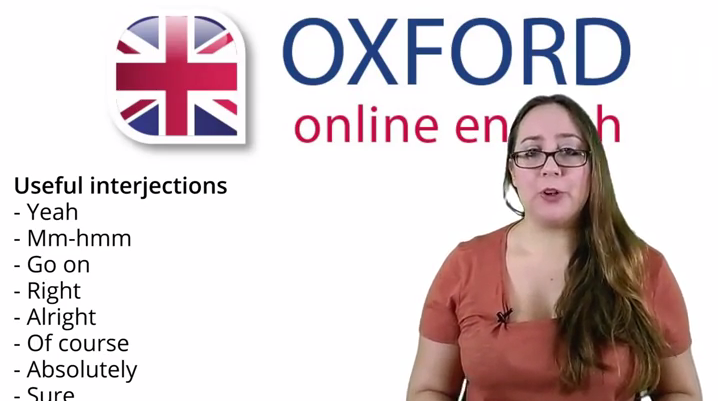
then what she ate for lunch, and so on, you can use these interjections: Yeah, mm-hmm, go on, right, alright, of course, absolutely, sure, okay.
接着吃了午餐等等,你可以用这些感叹词:Yeah,mm-hmm,go on,right,alright,of course,absolutely,sure,okay。
For example, if she tells you: I made this really nice salad for lunch.You could say: "Oh, right?"Or: "Yeah?"
比如,如果她告诉你:我午饭做了很好吃的沙拉。你可以说:“噢,是吗?”或者:“是嘛?”
Next, she starts telling you that you should think about getting married.
接着,她开始跟你说你该考虑结婚了。
You don't want to have that conversation, but you have to say something.
你不想谈这个,但是你必须说点什么。
What can you do?Use interjections, of course!
你能做什么?当然是用感叹词了!
Imagine that your mum says: "Don't you think you're old enough to settle down?
假设你妈妈说:“你不觉得你是时候安定下来了吗?
You're not getting any younger, you know!"You can say: "Oh, sure.
你不在年轻了,你知道的!”你可以说:“嗯,没错。
Anyway, what are you doing tomorrow?"Or: "Of course, of course.We'll talk about that another time."
不管怎么样,你明天打算做什么?”或者:“当然了,当然。我们以后再谈这件事吧。”
So, you can use interjections to keep a conversation going, and also to avoid talking about something you don't want to discuss!
所以,你可以用感叹词来让对话继续,还可以避免谈论某些你不想谈论的事!
You'll see this point a lot in this lesson.Interjections are very flexible.
本节课你会更多地看到这点。感叹词是非常灵活的。
Using them in different situations or with different intonation can have very different meanings.
在不同的情境使用它们或者用不同的声调可以有不同的意思。
Okay, but how else can you use interjections?
好了,但是你还可以怎么用感叹词?
Let's look at some other words and phrases you can use in many different situations.Part three: positive interjections.
让我们看一些其他的单词和短语,你可以在很多不同的场景使用。第三部分:正面感叹词。
Firstly, let's have a look at some examples of interjections you can use in positive situations.
首先,我们来看一些在积极的场景中使用感叹词的例子。
For example, if you hear some good news or a friend has something exciting to tell you, you might use an interjection to express happiness or other positive feelings.
例如,如果你听到某个好消息或者一个好友有很高兴的事要告诉你,你可以用感叹词来表达喜悦或者其他积极的情绪。
Let's look at some examples.Imagine that your best friend tells you: "I got a promotion at work!"Of course, you could say: "Congratulations!"
我们来看一些例子。假设你最好的朋友告诉你说:“我升职啦!”你当然可以说:“恭喜!”
If you wanted to respond in a more informal way, you could say something like, 'great', 'fantastic', 'awesome', 'nice' or 'that's good'.
如果你想以一种不是很正式地方式回应,你可以像这么说,'great','fantastic','awesome','nice' 或者 'that's good'。
You could also use an informal phrase, like: "Nice one!""Good for you!"
你还可以用一些非正式的短语,比如:“很好!”“你太棒了!”
If you hear something more unexpected and it's a good kind of surprise, you could say something like 'wow' or 'oh my God' or 'no way'.
如果你听说了某些意料之外的事而且有一点惊喜,你可以说像 'wow' 或者 'oh my God' 或者 'no way'。
Now, imagine the same situation.Your best friend says: "I got a promotion at work!"
现在,假设相同的情景。你最好的朋友说:“我升职了!”
You're happy for your friend, of course, but also surprised because your friend has only been working there for two weeks.
你为你的好友感到高兴,当然了,同时也很惊喜因为你的朋友只在那工作了两周。
What interjections could you use to show that you're surprised, but in a positive way?
你可以用什么感叹词来表达你很惊讶,但是是以一种积极的方式?
You could say: "No way!"Or: "Oh my god!"Remember that intonation is very important here.
你可以说:“不会吧!”或者:“我的天呐!”记住声调在这里是非常重要的。
If you're happy, your voice generally goes up at the end, like this: "No way!"
如果你是开心的,你的声音在结束时通常会上扬一些,像这样:“不是吧!”
If your voice goes down, it sounds like you're reacting to bad news: "No way…"
如果你的声音下沉,听起来就像你在回应坏消息:“不是吧...”
A different situation: if your friend is showing you photos of her wedding dress, you might want to say something like: "That's lovely, ahh.""Aww, what a beautiful dress."
另一个不同的场景:如果你的朋友给你看她婚纱的照片,你可能会像这样说:“真可爱啊。”“哇,这条裙子真美。”
Remember, you can only use 'ahh' and 'aww' for things that are nice or cute, for example, looking at baby photos or seeing your sister's new kitten.
记住,你只能对你觉得好看或可爱的东西用 'ahh' 和 'aww',例如,看小宝宝的照片或者是看到你姐姐的新猫咪时。
Okay, now you know how to react to good news and positive situations, but what if someone tells you some bad news?
好了,现在你知道如何应对好的消息或者是正面的情境了,但是如果某人告诉了你一些不好的消息呢?
How can you use interjections to react?Let's look.Part four: negative interjections.
你如何用感叹词回复?让我们来看看。第四部分:负面感叹词。
Sometimes, you might hear that everything is not going well for a friend or a relative.
有时候,你可能会听到某个朋友或者亲戚过得不太顺利。
This could be something more serious, for example, losing a job, or you might just be listening to your friend complaining about a bad day.
肯那个会有一些更严重的问题,例如,失业,或者你可能刚好听说你的朋友抱怨糟糕的一天。
Either way, using an interjection shows your friend that you're listening to them and that you understand how they feel.
不管怎样,用感叹词向你朋友表示你正在听他们讲话而且感同身受。
Imagine your best friend tells you: "I've broken my leg."
假设你最好的朋友对你说:“我把腿摔断了。”
You might say something like: 'Oh no', 'oh dear', 'oh my god', 'ugh' or 'no'.
你可以想这样说:'Oh no','oh dear','oh my god','ugh' 或者 'no'.
These are all typical interjections to use when you hear some bad news.
这些都是典型的你在听到坏消息时会用到的感叹词。
So, a conversation might go like this:Friend: "I've broken my leg."
这样,一个对话可以像这样进行:朋友:“我把腿摔断了。”
Mia: "Oh no!Are you okay?"Friend: "I'm fine, it just hurts a lot."Mia: "Oh dear, do you need anything?"
Mia:“哦不!你还好吧?”朋友:“我还好,只是很疼。”Mia:“噢亲爱的,你有什么需要吗?”
As you can see from this example, by using interjections, you keep the conversation going and expresses sympathy for your friend.
从这个例子你可以看出,通过使用感叹词,你让对话继续下去并且像你的朋友表达了同情。
If you hear something that you're shocked about, or maybe don't quite believe, you could say 'really?' or 'seriously?'
如果你听见一些你觉得震惊的事,或者不能完全相信的事,你可以说'真的吗?' 或者 '你认真的吗?'
For example, if your friend tells you: "I just lost my job."You might say: "Really?
例如,假设你的朋友告诉你:“我刚刚失业了。”你可以说:“真的吗?
What happened?""Seriously?I thought everything was going well."
怎么回事?”“你认真的吗?我以为一切顺利呢。”
Like many interjections, we can use these in different ways.
像很多感叹词,我们可以以不同的方式使用。
You can use different intonation to express different things.
你可以用不同的声调表达不同的事。
For example, 'really' and 'seriously' could also be used to be sarcastic.
例如,‘really’ 和‘seriously’也可以用来表达讽刺。
For example, if your brother tells you: "I did send you a birthday card, but it must have got lost in the mail."
例如,如果你的哥哥告诉你:“我真地寄了一张生日贺卡给你,但它可能在邮寄中丢失了。
You don't believe your brother.You know he forgot your birthday and that he never sent you a card.You could say: "Seriously?""Really?"
你不相信你的哥哥。你知道他忘了你的生日而且根本没有送你贺卡。你可以说:“当真?”“真的吗?”
You can see that these interjections are very flexible; you can use them to express many different things.
你可以发现这些感叹词是很灵活的;你可以用它们表达不同的事。
Hopefully by now you should have a good idea on what interjections are used for, as well as when to use them and some good examples of what to say in different situations.
但愿到目前你已经对如何用感叹词有了一个好的了解,同时也知道了什么时候用,以及一些在不同场合说什么的好例子。
Thanks for watching!I hope that you enjoyed the lesson!
感谢观看!我希望你们喜欢这节课!
You can see more of our free lessons on our website: Oxford Online English. com.See you next time!
你可以登录我们的网站观看更多免费课程:Oxford Online English. com.下次再见!


