(单词翻译:单击)
You've filled up your cart and made it to the front of the grocery line when you're confronted with yet another choice: what kind of bag should you use?
你已经装满购物车,到了结账队伍的最前面,此时你又将面临另一个选择:你应该用哪种购物袋?
If you've seen the images of plastic bags strewn across the ocean, it might seem obvious that plastic is bad for the environment.
如果你曾看到过塑料袋布满海洋的画面,塑料对环境有害似乎是显而易见的。
Surely a paper bag or a cotton tote would be the better option. But is that really true?
纸袋或棉布手提袋将无疑是更好的选择。但事实真的是这样吗?
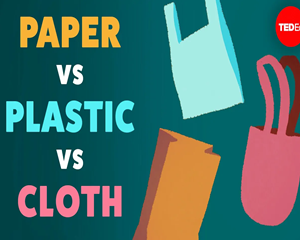
Each of these three materials has a unique environmental impact that's determined by its carbon footprint, its potential to be reused and recycled, and its degradability.
这三种材料中的每一种都有其独特的环境影响,这取决于其碳足迹、可重复利用和再循环的潜力,以及其可降解性。
So, to get the full story on these grocery bags we need to look at how they're made, how they're used, and where they ultimately go.
所以,要完整了解这些购物袋,我们需要看看它们是如何被制造、被使用的,以及最终会流向何处。
Let's start with plastic. The typical thin and flimsy plastic bag is made of high-density polyethylene, commonly known as HDPE.
让我们从塑料开始。这种典型的又轻又薄的塑料袋是由高密度聚乙烯制成的,俗称HDPE。
Producing this material requires extracting petroleum from the ground and applying extreme heat.
生产这种材料需要从地下开采石油,并对其施以极高的温度。
The resulting polymer resin is then transported alongside additional ingredients like titanium oxide and chalk to a bag manufacturing plant.
之后,由此产生的聚合物树脂与其它附加成分,如氧化钛和白垩,一起被运到塑料袋制造厂。
Here, coal powered machines melt the materials down and spin them into sheets of plastic, which are then folded into bags.
在这里,靠煤驱动的机器会将这些材料熔化,再将其纺成一张张塑料,之后它们会被折叠成袋子。
By the time a bag reaches its final destination, it's contributed an estimated 1.6 kg of carbon dioxide to the atmosphere.
当一只塑料袋到达最终目的地时,它向大气排放了大约1.6公斤的二氧化碳。
That's the same amount of carbon a car produces, driving a little over 6 kilometers.
这与一辆汽车在行驶超过六公里后所产生的碳排放量相同。
But the alternatives actually possess a much larger carbon footprint.
但是塑料袋替代品的碳足迹其实更大。
Paper is made from wood pulp, and when you account for the carbon cost of removing trees from their ecosystems, a single paper bag can be responsible for about 5.5 kg of carbon dioxide.
纸是由木浆制成的,如果把树木从生态系统中移除的碳成本也计算在内的话,一只纸袋就可以产生大约5.5公斤的二氧化碳。
Meanwhile, growing cotton is an extremely energy and water intensive process.
相比之下,棉花种植是一个极其耗费能源与水的过程。
The production of a single cotton tote emits an estimated 272 kg of carbon dioxide.
每生产一只棉质手提包大约会排放272公斤的二氧化碳。
When we compare carbon footprints, plastic bags are the clear winner.
当我们比较碳足迹时,塑料袋对环境影响显然最小。
But environmental impact is also determined by how the bag is used.
但袋子对环境的影响也取决于它的使用方式。
Reusing or recycling these bags significantly offsets their environmental toll by reducing demand for new production.
回收或者再次利用这些袋子可以很大程度上减少对新袋子的需求,从而抵消它们对环境的破坏。
To quantify that offset, we can divide the bag's carbon footprint by the number of times it's reused.
想要量化这种抵消效果,我们可以用袋子的碳足迹除以它被重复使用的次数。
For example, if a typical paper bag is reused three times, it has a lower net impact than a single-use plastic bag.
举例来说,如果一只典型的纸袋被重复使用三次,那么它对环境的净影响就会小于一次性塑料袋。
The carbon footprint of a cotton tote can similarly be lowered, if it's reused 131 times.
一只棉质手提袋的碳足迹可以同样被降低,如果它被重复使用131次的话。
Of these three options, durable cloth totes are most likely to be reused.
在这三种选择中,耐用的布质手提袋最有可能被重复使用。
Evidence shows paper bags are quickly discarded due to their tendency to tear. This issue plagues HDPE plastic bags as well.
有证据表明,纸袋因易碎会很快被丢弃。以高密度聚乙烯为原料的塑料袋也有同样的问题。
But even when they're made to avoid tearing, their widespread availability makes it easy to treat them as single-use items.
但即便这些塑料袋被做得结实耐用,由于供应广泛,它们很容易被当成一次性物品。
Fortunately, researchers estimate that 40% of HDPE bags are reused at least once for throwing out waste.
幸运的是,研究人员估计,40%的高密度聚乙烯袋会被当成垃圾袋重复使用至少一次。
Recycling these bags also offsets their carbon footprint, but it's not universally possible for each material.
回收这些塑料袋也可以抵消它们的碳足迹,但并不是每种材料都能被回收利用。
Many countries lack the infrastructure to efficiently recycle plastic bags.
许多国家缺乏有效回收塑料袋的基础设施。
Cotton totes are perhaps even more difficult to breakdown and process,
棉质手袋可能更难分解和处理,
but since they're often reused for long periods, they're still least likely to end up in landfills.
但由于它们经常会被重复使用很长一段时间,所以它们被扔入填埋场的可能性最小。
Whenever these bags aren't recycled, the third factor in calculating environmental impact comes into play: degradability.
每当这些袋子不再被回收了,计算环境影响的第三个因素就会开始发挥作用:即可降解性。
Since HDPE bags are heat-resistant and insoluble, they stick around long after we're done with them.
由于高密度聚乙烯袋耐热且不能溶解,所以在被丢弃之后,它们仍会存留很久。
Partially broken down plastic can circulate in ecosystems for centuries.
被部分分解的塑料可以在生态系统中循环好几个世纪。
Cotton on the other hand degrades substantially in a matter of months, and paper bags break down completely in just 90 days.
相比之下,棉花在几个月内就会基本上被降解;而纸袋在短短90天内就会被完全分解。
So, which bag should you use? It turns out the most environmentally friendly bags have features of several materials we've discussed.
那么,你究竟该使用哪种材质的袋子呢?事实证明,最环保的袋子具有我们讨论过的几种材料的特点。
They're durable and reusable, like cotton, but made of plastic, which has a lower carbon footprint than cotton or paper.
它们像棉花一样结实且可重复使用,但是却由塑料制成,其碳足迹低于棉花或纸张。
These sturdy shopping bags consist of polyester, vinyl and other tough plastics, and are already used worldwide.
这些坚固的购物袋由聚酯、乙烯基和其他硬塑料组成,而且已经在世界范围内使用。
More importantly, they should last a lifetime -- making them the best option for the planet, and your groceries.
更重要的是,它们可以永久使用--这使它们成为了对于地球和日常购物的最佳选择。


