(单词翻译:单击)
Human space exploration is all the rage these days, with NASA and other organizations racing to get astronauts on the Moon and beyond.
近来,人类太空探索特别火,美国宇航局(NASA)等机构都争先恐后地将宇航员送往月球甚至更远的地方。
But one UK-based startup is dreaming of something a little different.
但有一家位于英国的初创公司正梦想着可以做一点与众不同的事情。
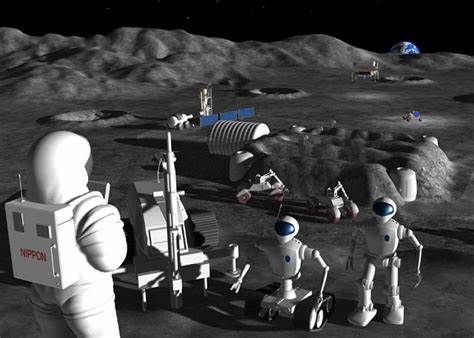
They want to populate the Moon with robots.
他们希望能让机器人生活在月球上。
And instead of building a traditional, multi-wheeled rover, they're designing ones with legs.
这次他们不想建造传统的多轮机器人探测器,而是想设计有腿儿的机器人探测器。
The company Spacebit announced their plans in October, revealing models of their crawling, jumping, kind of adorable mini-robots.
Spacebit公司宣布了他们10月份的计划——公开机器人探测器爬行、跳跃的模型,这次的机器人会是观赏性很棒的迷你机器人。
You heard me! Adorable, not creepy.
咳咳,再强调一下,是观赏性很棒,而非怪异哦。
These unnamed walking rovers are based on designs of CubeSats, small, boxy spacecraft we've been launching since 2003.
这些可以行走的探测器尚未命名,它们是根据立方体卫星来设计的。立方体卫星是2003年发射的小型四方形航天器。
They have a mass of about one kilogram, only cost a few million dollars to produce, and can be put together in less than a single year.
立方体卫星质量大概1千克,生产成本只有几百万美元,用不到一年的时间就能组装完毕。
Their small size means Spacebit can send more than one in a single rocket launch, and they can access parts of the Moon that larger, wheeled rovers can't.
由于立方体卫星体型小巧,所以Spacebit公司可以在一支火箭中放置至少2个立方体卫星,从而接触到提醒更大的带轮探测器所达不到的地方。
That includes features like cracks, crevices, and even lava tubes:
这就包括一些特征,比如裂缝、缝隙甚至是熔岩管。
hollow tunnels formed by ancient streams of lava.
古代熔岩流形成的空隧道。
This kind of exploration will help reveal a lot about the Moon's geology, and it could also pave the way for future human missions.
这类探索将有助于解开许多关于月球地质情况的信息,也会为未来人类的探索铺路。
Scientists have proposed that, if we ever want to live on the Moon, living under its surface, like in a lava tube, might be a good idea.
科学家提出,如果我们想在月球上生活的话,那么生活在地表以下,比如熔岩管里,可能会是个好主意。
That would protect us from a lot of the Sun's radiation, and there wouldn't be such drastic temperature changes over the course of a lunar day.
这样的做法可以保护我们不受太阳辐射,太阴日期间,温度也不会有巨大的变化。
But that's a plan for the distant future. For this first rover mission, things will be a little simpler.
但这个计划是为遥远未来制定的。对于这个首次的探测器任务来说,情况会简单一些。
In 2021, a single Spacebit rover will travel to the Moon on a lunar lander from the company Astrobotic, along with more than a dozen other confirmed payloads, many of which are funded by NASA.
2021年,Spacebit派出的单个探测器会乘坐某着陆器去往月球,该着陆器由Astrobotic公司研发。与此同时,它将带有一些确认会带的载荷,其中很多都是由美国宇航局(NASA)资助的。
Then, once our little robot buddy is on the surface, it will send back some high-def video and LIDAR data, basically, 3-D maps made by shooting out laser beams and having the light bounce off of things.
然后,等我们的小探测器抵达月球表面时,会发送回一些高清视频和激光雷达数据。这些基本上是3D地图。这些3D地图是通过射出激光束并反弹而获得的。
The rover won't go very far or last very long, though.
不过,这个探测器不能走很远,也无法持续很长的时间。
It will only walk about ten meters from the lander, and likely will only last one lunar day, because it can't survive the Moon's nighttime temperatures.
探测器只能从着陆器那里走10米左右的距离,而且很有可能只能持续一个太阴日。因为探测器无法抵御月球夜间的温度。
But if all goes well, we might be seeing a lot more of these new mini-rovers!
但如果一切顺利,我们或许能看到更多这种类型的迷你探测器哦!
And they'll give us an opportunity to learn some cool stuff.
它们会为我们提供机会来了解很酷的东西。
Of course, we've got plenty more technology out there right now, studying farther and farther-flung reaches of the cosmos.
当然啦,我们现在已经有很多技术了,对宇宙的了解也越来越多了。
And last month in The Astrophysical Journal Letters, one group of researchers reported that they'd found a massive explosion that will help us better understand the universe's lighthouses, called pulsars.
上个月,在《天体物理学杂志通讯》上,一组研究人员指出他们发现了一次大型爆炸,这次爆炸将有助于我们更好地了解宇宙的灯塔——脉冲星。
Pulsars form when massive stars die. After a star explodes as a supernova, it can leave behind a collapsed core made mostly of neutrons: a neutron star.
脉冲星会在大型恒星消亡时产生。某恒星作为超新星爆炸的时候,会留下探索的内核,内核基本上由中子组成:中子星。
When one of those objects spins fast enough and emits enough radiation, we see it from Earth as a pulsating light.
当其中一个物体转速足够快,并放射出足够辐射的时候,我们就能从地球上看到脉冲的光。
And we officially call it a pulsar. The pulsar in question, called J1808 for short, is about 11,000 light-years away.
这个的学名是脉冲星。这里提到的脉冲星是J1808的简写,距离我们有1.1万光年远。
We discovered it back in 1996 when a satellite saw it release a giant flare of X-ray radiation.
我们是在1996年发现这颗脉冲星的,那时候,卫星发现这颗脉冲星放射出了巨大的X光辐射。
And since then, we've seen it flare every two to four years.
从那时起,每隔2-4年就会发现它闪烁。
But J1808's most recent explosion, technically referred to as a Type I X-ray burst, was something of a surprise.
但J1808最近的一次爆炸是1型X光爆,这是很令人惊艳的。
It was picked up in August by NASA's NICER telescope on the International Space Station, and in only 20 seconds, it released as much energy as our Sun does in about ten days.
这次爆炸是8月份NASA的中子星内部成分探测器(NICER)在国际空间站上发现的,在仅仅20秒的时间里,它放射出了太阳在大概10天的时间里才能放射出的能量。
But that wasn't the most interesting part: It was the fact that this pulsar had a combination of traits that's never been observed in the same flare.
但最有意思的是:这颗脉冲星兼具多个特点,这是在同一次光耀中没有观察到的。
For context, X-ray bursts happen when J1808 steals hydrogen gas from its companion, a gaseous body called a brown dwarf that orbits the pulsar.
提供一些背景信息:X光爆发生的条件是,J1808从其相伴的物体上吸取氢气,与它相伴的是气态物体,也就是环绕这颗脉冲星飞行的棕矮星。
Over time, the pulsar steals enough gas that some of it rains down onto the pulsar's surface.
随着时间的流失,这颗脉冲星吸取了足够的气体,导致部分气体变成液态形式降落到脉冲星表面。
There, it's hot enough and there's enough pressure that the bottom layer of hydrogen undergoes nuclear fusion and turns into helium.
脉冲星表面温度极高,压强极大,所以,氢气的底层发生了核聚变,变成了氦气。
And when there's enough helium, it explodes, and you get an X-ray burst.
氦气足够多的时候,就会发生爆炸,就会出现X射线爆。
Typically, these bursts get brighter, hit a peak, and then fade away.
比较典型的情况是,射线爆的亮度越来越高,然后就会逐渐淡去。
But this last burst from J1808 didn't do that.
但来自J1808的这最后一次射线爆却并没有出现这样的情况。
Instead, about half a second after its flare started, the amount of X-rays it released suddenly stopped increasing.
相反,在光耀开始大概0.5秒后,其放射的X射线的总量突然停止增长。
For about a second, the flare stalled. And then it continued on and reached maximum intensity.
在大概1秒的时间里,光耀熄灭了。然后又开始继续达到最大的强度。
Astronomers think that this happened because of specific events on the pulsar's surface.
天文学家认为,发生这种现象的原因是脉冲星表面出现了一些特定的情况。
They believe that, right after the flare kicked off, the blast built up enough energy to throw any remaining hydrogen back into space.
他们认为,在光耀开始后,积聚了足够的能量,足以将其余的氢气甩回太空中。
That created the apparent stall in the curve. Then, the flare continued, and the helium layer rapidly expanded, too,
他们在曲线中产生了明显的熄灭现象。然后,光耀又继续,氦气曾迅速扩张。
although it cooled and contracted again shortly afterward.
虽然随后冷却下来了,但不久后又会收缩。
The whole burst was more or less over in about a minute.
整体的光爆情况在大概1分钟的时间里基本结束了。
But even though the event was short, it's significant.
但虽然这次活动很短,意义却非凡。
This is the first evidence that actually shows two separate ejection events during a pulsar's X-ray outburst; one for hydrogen, and the other for helium.
这是第一次有证据表明脉冲星X射线爆的2个单独放射活动:1个是氢气,1个是氦气。
By itself, that opens up the ability for astronomers to study the differences between these events and make sure they align with our models.
这件事情本身让天文学家有能力研究这些活动之间的不同,确保跟模型相匹配。
And that wasn't the only weird thing that happened here.
这并非这里发生的唯一一件怪事。
After all that, J1808 got about 20 percent brighter for a few seconds.
这事结束之后,J1808在数秒的时间里,亮度提高了大约20%。
And we don't know why that happened; at least, not yet.
我们不知道为何,至少目前还不知道。
Additionally, researchers found a few other things, like evidence of X-ray flashes that happened at other locations on the pulsar's surface.
此外,研究人员发现了其他一些情况,比如脉冲星表面其他地方出现了X射线闪光的证据。
These features have all been seen across other pulsar outbursts, but J1808 put them all together.
这些特征在其他脉冲星射线爆的时候也可以看到,但J1808将这些现象汇总了。
And it did so just this one time; none of its other captured flare-ups have produced the same results.
但也只有这一次;捕捉到的其他光耀现象都没有同样的结果。
This makes the burst an important piece of evidence for understanding pulsars.
这就使得这次射线爆成为了解脉冲星的一份重要证据。
It shows that the rules governing these objects can be so complex that the same body doesn't react the same way every single time.
这表明这些物体所遵从的原则非常复杂,所以同一个物体每一次的表现都不同。
That might seem a little annoying, for space stuff to suddenly throw something new at you, but in a way, it's good news.
宇宙里的东西会突然向咱们扔新东西,这会让人有点烦躁,但某种程度上看是好消息。
It means we have a chance to really pin down our understanding of how the universe works.
这意味着我们有机会来确定自己对宇宙运作机制的认知了。
This edition of SciShow Space News is brought to you by this episode's President of Space: SR Foxley.
本期节目的播出离不开粉丝福克斯雷的支持。
SR Foxley is one of our patrons on Patreon, and is part of an amazing community that supports SciShow and loves learning together.
福克斯雷是Patreon的一位忠实粉丝,Patreon是个了不起的社群,他们支持我们的节目,他们也喜欢一同学习进步。
We're really grateful for our patrons, so if you're one of them, thank you. We're so glad you're here.
我们真地很感激粉丝们,如果您也支持我们节目的话,那在此说一声感谢。我们很高兴你们喜欢我们的节目。
If you want to learn about becoming a patron and maybe even being our next President of Space, you can go to patreon.com/scishow.
如果大家想了解如何成为Patreon的一员,甚至成为下一位像福克斯雷一样的忠实粉丝的话,可以浏览一下patreon.com/scishow。
And as always, thanks for watching.
再次在说一声感谢观看。


