(单词翻译:单击)
Hi, this is Crash Course Economics, I'm Adriene Hill.
嗨,这里是经济速成班,我是埃德因·希尔。
And I'm Jacob Clifford. So, when economists make their models,
我是雅各布·克利福德。当经济学家们制作模型时,
they generally assume that people are rational and predictable.
通常会假设人是理性和可预测的。
But when we look at actual human beings,
但我们在研究真实的人类时,
it turns out that people are impulsive, shortsighted, and a lot of times, just plain irrational. Look! Balloons!
发现人们原来是冲动的、目光短浅的,并且很多时候毫无理性。看!气球!
Today we're talking about Behavioral Economics and how people actually make decisions.
我们今天将要讨论行为经济学以及人们实际做决定的方式。
Behavioral economics is a subfield of economics
行为经济学是经济学的一个分支,
that focuses on the psychological, social, and emotional factors that influence decision-making.
它关注的是影响决策的心理、社会和情感因素。
That's not necessarily new.
它不一定是新内容。
In fact, our old buddy Adam Smith, discussed it in The Theory of Moral Sentiments in 1759.
事实上,我们的老朋友亚当·斯密在1759年的《道德情操论》中讨论过它。
But generations of economists chose to ignore many irrational elements of decision-making
但一代又一代的经济学家们却选择忽视许多非理性的决策因素
since it makes it harder to predict human behavior.
因为它使得预测人类行为变得更加困难。
But in the last few decades, behavioral economics has made a comeback.
但在过去几十年里,行为经济学卷土重来。
Several Nobel Prizes have been awarded to researchers that blend economics and psychology
几项诺贝尔奖被授予给了将经济学和心理学相结合的研究人员,
and behavioral economics is being applied to more and more fields
而且行为经济学正被应用于越来越多的领域,
like marketing, finance, political science and public policy.
比如市场营销、金融、政治科学和公共政策。
Now it's important to mention that irrational human behavior doesn't negate everything you've learned here at Crash Course Economics.
现在有必要提一下的是,非理性的人类行为并不能否定你在经济速成班中学到的一切。
It just adds another layer of complexity, which is exactly what we love at Crash Course.
它只是另外增加了一层复杂性,而这正是我们喜欢的速成班内容。
Now in most cases, people are rational.
在大多数情况下,人们是理智的。
When the price falls for a product, people have a tendancy to buy more of that product,
当一种商品的价格下降时,人们会有购买更多那种商品的倾向,
so the law of demand holds true.
所以需求法则是成立的。
But economists also accept that there is bounded rationality.
但经济学家也承认,理性是有限的。
Limits on information, time and abilities might prevent people from seeking out the best possible outcome.
对信息、时间和能力的限制可能会阻止人们寻找最好的可能结果。
For example, if the price for ice cream is really low, consumers might not buy more.
例如,如果冰淇淋的价格真的很低,消费者可能不会买更多。
In fact, they might buy less if they think that low price means that ice cream tastes horrible.
事实上,如果他们认为低价意味着冰淇淋的味道糟糕,他们可能会买得更少。
Now if that happens, then the law of demand doesn't hold true,
如果发生这种情况,需求定律就不成立了,
which creates a serious problem in classical economics.
这在古典经济学中成了一个严重问题。
I mean it is the LAW of demand.
我指的是需求法则。
You can't have a situation that breaks the law and still call it a law.
你不能在一种情况打破了法则时仍称它为法则。
That doesn't happen in other disciplines like physics…except it does.
这在物理学等其他学科中不会发生,但它发生了。
The Newtonian laws of physics, like gravity, hold true most of the time but they break down at the quantum level.
牛顿的物理定律,比如万有引力定律,在大多数情况下都成立,但在量子层面就会失效。
They explain the orbits of planets, but they have a harder time explaining the orbits of electrons.
它们能解释行星轨道,但是很难解释电子轨道。
And it's the same in economics.
经济学也是如此。
Classical economic theories explain the big picture stuff pretty well,
古典经济学理论能很好地解释宏观问题,
but there are still a lot of things about individual decision-making that we just don't fully understand.
但是关于个人决策的很多事情我们还不能完全理解。
In our ice cream example, one of the problems is lack of information.
在我们的冰淇淋例子中,问题之一是缺乏信息。
Classical economics assumes that consumers have perfect information when making choices.
古典经济学假设消费者在做选择时拥有充足的信息。
That is, they know or at least can quickly access information about prices and quality,
也就是说,他们知道或者至少能快速接触到价格和质量的信息,
but, in reality, they often don't.
但事实上,他们经常做不到。
Sure, the consumer could ask around or call their friends to see if they've tried that type of ice cream
当然,消费者可以问周围的人或者打电话给朋友,看看他们是否尝试过这种冰淇淋,
but they're probably not gonna do that.
但他们可能不会这样做。
In this situation, consumers may act on the limited information they have, a suspiciously low price,
在这种情况下,消费者不了解它,就可能会根据他们拥有的有限信息——
which means either the ice cream is a great deal or it tastes like mayonnaise. They just don't know.
意味着冰淇淋要么不错,要么尝起来像蛋黄酱的可疑低价而采取行动。
Prices do send a lot of signals, and there's even science on how prices change perception.
价格的确会发送很多信号,甚至还有关于价格如何改变观念的科学。
A study in California analyzed the brains of people taste testing a variety of red wines.
加利福尼亚的一项研究分析了人们品尝各种红酒时的大脑。
The researchers gave participants fake prices and scanned their brains to determine the level of enjoyment.
研究人员给了参与者虚假的价格,并扫描他们的大脑以确定其享受程度。
The results were surprising. When they thought the price was higher, they actually liked the wine more.
结果令人惊奇。当他们认为哪种红酒价格更高时,会更喜欢它。
This held true even when the subjects were given the exact same type of wine
即使实验对象喝的酒类型完全相同,
but were told it was a different higher-priced wine.
但被告知它是另一种价格更高的红酒时,结果也成立。
The researchers said "Contrary to the basic assumptions of economics…
研究人员说“与经济学的基本假设相反...
marketing actions can successfully affect experienced pleasantness by manipulating non-intrinsic attributes of goods."
营销行为可以通过操纵商品的非内在属性成功影响经历的愉快程度。”
So, once you've got a palatable Pinot Noir, you might be able to raise the price and actually raise the demand.
所以,你一旦找到了美味的黑比诺,可能能够提高其价格并增加需求。
All you have to do is change perceptions.
你所要做的就是改变观念。
The idea that perceptions and passions influence our actions also applies in finance.
观念和激情影响我们行为的观点也适用于金融。
Many economists used to believe that assets, like stocks and real estate, would stay at or near their real value
许多经济学家过去认为,资产(如股票和房地产)将保持或接近其实际价值。
because cold, calculating investors would buy undervalued assets and sell overvalued assets.
因为冷酷精明的投资者会买进低估资产,卖出高估资产。
But that doesn't explain bubbles:
但这并不能解释泡沫:
In real life, investors aren't always cold and calculating.
在现实生活中,投资者并不总是冷酷而精于算计的。
They can get worked up and irrational sometimes.
他们有时会变得激动和不理智。
This helps explain bubbles. From the Dutch Tulip Mania of the 17th century to the 2008 financial crisis.
这有助于解释泡沫,从17世纪的荷兰郁金香狂热到2008年的金融危机等泡沫。
Investors became irrationally exuberant, and were driven not by logic,
投资者变得非常不理性,他们不在受逻辑的驱使,
but by what economist John Maynard Keynes once called "Animal Spirits."
而是经济学家约翰·梅纳德·凯恩斯(John Maynard Keynes)曾说过的“动物本能”驱使。
So behavioral economics doesn't blow up traditional economic theory,
所以行为经济学并没有摧毁传统经济学理论,
it just seeks to understand when and why people behave differently than economic models suggest.
它只是试图理解人们的行为方式什么时候以及为什么不同于经济模型。
Let's go the Thought Bubble:
我们去看“Thought Bubble”:
One of the most popular experiments in behavioral economics is called the ultimatum game.
行为经济学中有一个最受欢迎的实验叫做最后通牒游戏。
In this experiment, two players decide how to share a specific sum of money, let's say 100 dollars.
在这个实验中,两个玩家决定分配一定数量金钱的方式,假设是100美元。
The first player is given all the money and then is asked to propose a way of splitting it with the second player.
第一个玩家会得到所有的钱,然后被要求提出一种与第二个玩家分钱的方法。
Now if the second player accepts the deal, both players get to keep the money.
如果第二名玩家接受这笔交易,两名玩家都可以保留这笔钱。
But if the second player refuses, nobody gets to keep the money.
但如果第二个玩家拒绝,那么没有人能继续持有这笔钱。
When the first player offers to split the money 50/50, the second player almost always accepts it.
假设第一个玩家提出对半分,那么第二个玩家几乎总会接受。
But what happens when the first player offers an unequal split, like 80/20?
但如果第一个玩家提出不公平的分钱方法,比如八二分时会怎么样?
Would you accept that offer? Well, it turns out that less equal offers are often rejected.
你还会接受它吗?事实证明,不那么平等的提议通常会遭到拒绝。
Now that doesn't seem surprising, but it directly contradicts classical economic theory. It's irrational.
这似乎并不奇怪,但它直接与古典经济学理论相矛盾。它并不理性。
The rational choice would be for the second player to accept any offer, even if it's only a dollar.
第二个玩家的理性选择是接受任何提议,哪怕仅有一美元。
After all, a dollar is better than nothing.
毕竟,一美元也比什么都没有要好。
But human behavior is not motivated solely by gain;
但是人类行为并不仅由利益驱动;
it's also shaped by complex ideas like fairness, injustice, and even revenge.
它还受到公平、不公正甚至报复等复杂思想的影响。
The ultimatum game shows that people aren't always as predictable as many economists like to suggest.
最后通牒游戏表明,人们并不总像许多经济学家认为的那样可以预测。
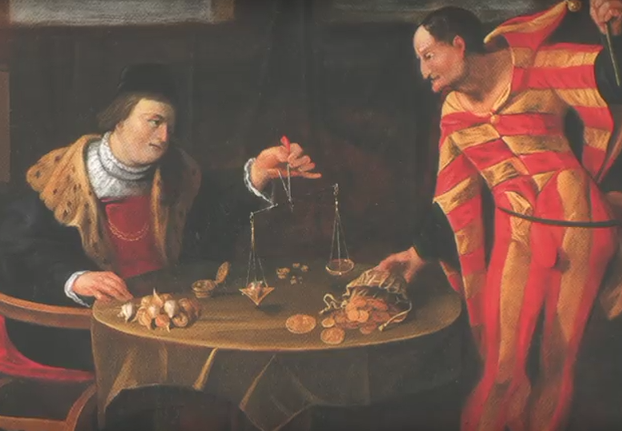
If people were entirely rational, then they would consistently make the same decision given identical options,
如果人们完全理性,那么他们在给定同种选择时始终会做出相同的决定,
but sometimes people's preferences are dependent on how the options are presented.
但有时人们的偏好取决于选择的呈现方式。
Psychologists call this type of cognitive bias the Framing Effect.
心理学家们称这种认知偏见为框架效应。
I mean, would you rather eat beef that's 75% fat free or 25% fat?
我的意思是,你更愿意吃75%不是脂肪的牛肉还是25%是脂肪的牛肉?
Would you rather enter a raffle that claims that 1 out of every 1000 players is a winner
你愿意参加声称每1000个玩家中就有1个赢家的抽奖,
or a raffle that points out that there will be 999 losers?
还是声称会有999个输家的抽奖活动?
Would you support a law named the "Improve our Schools Act" or one named the "Raise our Taxes Act"?
你会支持一项“改善学校法案”,还是一项“提高税收法案”?
Each of these scenarios can be framed in ways that influence your decision.
每一种场景都可以以影响你决定的方式进行设计。
Classical economics argues that framing should have relatively little effect on decision making
古典经济学认为,框架对决策的影响相对较小,
because most people are rational and intelligent, but in the real world, people can be pretty irrational.
因为大多数人都是理性和聪明的,但是在现实世界中,人们可能非常不理性。
Thanks Thought Bubble.
感谢“Thought Bubble”。
So businesses have known about the psychology of decision making for a long time.
因此,企业对决策心理的了解由来已久。
For example, a gym might break down its membership fee and advertise it only costs only 1 dollar a day,
例如,健身房可能会降低会员费,并且宣传它每天只花1美元,
which seems way more affordable than 365 dollars a year.
这似乎比一年365美元更让人负担得起。
And a TV priced at 499.99 dollars seems like a better deal than one priced at 500 dollars.
而一台499.99美元的电视机似乎比一台500美元更值得买。
This is called psychological pricing.
这被称为心理定价。
It can make people feel like they're getting a good deal.
它能让人们觉得自己得到了一笔好交易。
Interestingly, high-end retailers sometimes do the opposite.
有趣的是,高端零售商有时恰恰相反。
They set their prices at whole dollars,
他们定整价,
basically signalling their goods are of a higher quality than you might see at a discount store.
这基本表明他们的商品质量比你在折扣店看到的要高。
Behavioral economists also like to talk about nudge theory.
行为经济学家也喜欢谈论助推理论。
Nudges encourage people to act a certain way, without actually changing the choices that are available to them.
“轻推”鼓励人们以某种方式行事,而不是真正改变他们可以做出的选择。
Fighting childhood obesity is a priority in many countries
在许多国家,对抗儿童肥胖是一项优先任务,
and policy makers have suggested a whole range of solutions.
政策制定者们已经提出了一系列解决方案。
Everything from banning soda in schools to running media campaigns promoting healthy eating.
从禁止在学校喝汽水到开展健康饮食的媒体宣传活动等各方面都有。
Behavioral economists approached the problem a little differently.
行为经济学家对这个问题的看法略有不同。
They wanted to see if they could get children to eat healthier by rearranging school cafeterias.
他们想知道能否通过重新安排学校食堂来让孩子们吃得更健康。
They put healthier food like fruits and vegetables on eye-level shelves
他们把水果蔬菜等更健康的食物放在与眼睛平齐的架子上,
and less healthy foods, like desserts, in less convenient places.
而甜点等不健康的食物放在不那么方便的地方。
Classical economic theory suggests that this idea wouldn't work since rational people would pick the brownie.
古典经济学理论认为,这个想法行不通,因为理性的人会选择巧克力蛋糕。
But it turns out, students choose the healthier foods.
但事实证明,学生们会选择更健康的食物。
Nudge theory works and it's changing how we implement public policy.
助推理论可以起作用,它正在改变我们执行公共政策的方式。
There are some issues that can be addressed best with the right type of nudge.
有些问题可以通过正确的助推得到最好的解决。
Let's talk about something else behavioral economists look at: risk.
我们来谈谈行为经济学家研究的其他内容:风险。
Let's say someone offered you two sealed envelopes.
假设有人给你两个密封的信封。
One has a hundred dollars, and one has no dollars.
一个有一百美元,一个什么也没有。
You can choose an envelope, or you can take 50 dollars cash right now.
你可以选择一个信封,或者你现在就可以拿走50美元现金。
So do you take the fifty bucks? Or what about 49 dollars?
那么你会拿50美元吗?那么49美元呢?
Now this is unlikely to happen to you in real life, but the exercise is about your attitude towards risk.
这在现实生活中不可能发生,但是它检验的是你对风险的态度。
Since there's a 50/50 chance of getting 100 dollars or nothing,
因为获得100美元或0美元的机会均等,
the expected return, or the average of the possible outcomes is 50 dollars.
那么预期回报,或者说可能收入的平均值是50美元。
If you're willing to accept 50 dollars cash to abandon the envelopes, then you're risk neutral.
如果你愿意接受50美元现金而放弃信封,那么你就是风险中立者。
But if you accept less than 50 dollars, just to avoid walking away with nothing, then you're risk-averse.
但如果你接受少于50美元的金额,只为避免一无所有得离开,那么你就是风险规避者。
Behavioral economists have done lots of studies about risk and in particular loss aversion,
行为经济学家已经做了很多关于风险尤其是损失规避的研究,
the idea that people strongly want to avoid losing.
认为人们强烈希望避免失败。
Studies show that, in general, losses are more painful than gains are pleasurable.
研究表明,总的来说,损失的痛苦比收获的快乐更多。
So people might choose a safe course of action even if it's not the most logical choice.
所以人们可能会选择一种安全的行动方式,即使这不是最合理的选择。
Let's say we flip a coin and if it's heads I give you 100 dollars,
假设我们抛硬币,如果是正面,我给你100美元
but if it's tails, you have to give me 50 dollars.
但如果是反面,你就得给我50美元。
Now, mathematically you should go for it.
从数学意义来讲,你应该努力争取。
But many people won't because they want to avoid losing.
但许多人不会这么做,因为他们想要避免损失。
Understanding of loss aversion can help businesses and policymakers influence decisions.
理解损失规避可以影响企业和决策者们的决策。
For example, some grocery stores in the Washington DC tried to decrease the use of disposable plastic bags
例如,华盛顿特区的一些杂货店想要减少一次性塑料袋的使用,
by offering five cent bonuses if customers brought reusable bags.
那么他们可以为带环保袋的顾客提供5美分奖金。
The policy didn't do that much.
这一政策并没有起到多大作用。
Later they tried a five-cent tax on plastic bags, and this time, people used fewer disposable bags.
后来,他们尝试对塑料袋征收5美分的税,而这次,人们使用的一次性塑料袋减少了。
This is loss aversion at work.
损失规避起作用了。
The pain of having to pay 5 cents per bag was greater than the benefit of receiving 5 cents per bag.
为每个塑料袋支付5分钱的痛苦大于接受5美分的收益。
Another study analyzed how loss aversion can help incentivise employees.
另一项研究分析了损失规避是如何帮助激励员工的。
Researchers divided workers into three groups.
研究人员将工人分成了三组。
The first was a control group that wasn't given a bonus.
第一组是没有奖金的对照组。
The second group was promised a bonus at the end of the year based on meeting specific goals.
第二组被承诺在年底根据其实现的特定目标获得奖金。
Participants in third group were given the bonus at the beginning of the year
第三组参与者在年初拿到了奖金,
and were told that they would have to pay it back if they didn't meet specific goals.
并被告知,如果他们没有达到特定目标将必须把钱还回来。
The workers in the first and second groups performed about the same.
第一组和第二组的工人表现相同。
But those in the third group performed significantly better. We just hate losing.
但第三组工人的表现明显好一些。我们只是讨厌损失。
So, behavioral economics has a lot to tell us.
所以,行为经济学能告诉我们很多内容。
Accounting for emotion gives us a realistic view of how people actually behave.
对情绪的解释让我们对人们的实际表现方式有了一个现实的认识。
We might not always be the rational actors classical economists believe us to be.
我们可能并不总是古典经济学家以为的那样理性。
For years, economics has had a blind spot.
多年来,经济学有一个盲点。
But behavioral economics helps us get a better look at how we make decisions.
但是行为经济学会帮助我们更好地了解我们做决定的方式。
Thanks for watching. We'll see you next week.
感谢您的收看。我们下期见。
Thanks for watching Crash Course Economics.
感谢您收看经济速成班,
It's made with the help of all these awesome people.
它是由这些好心人帮助制作的。
You could help keep Crash Course free, for everyone, forever, by supporting it at Patreon.
你可以通过支持Patron上的节目帮助速成班永远免费对所有人开放。
Thanks for watching. DFTBA.
感谢您的收看,别忘了做个了不起的人。


